Search results
1951
[Page extract]
BS 7882
This British Standard specifies the requirements for the calibration and classification of torque measuring devices including those used for the calibration of hand torque tools to BS EN 26789: 1994/
1952
[Page extract]
BS 5G 178-1
Provides updated tests and test requirements for crimped joints with copper, copper alloy, aluminium and aluminium alloy conductors.
1953
[Page extract]
ASTM D2148
ASTM D2148 is a test standard that for testing bondable silicone rubber tapes, which form a sealed structure either with the application of heat (and pressure if needed) or by the process of auto-adhesion (self-fusing).
1954
[Page extract]
ASTM F2256-05
This test method is intended to provide a means for comparison of the adhesive strengths of tissue adhesives intended for use as surgical adhesives or sealants, or both, on soft tissue.
1955
[Page extract]
ASTM C393
This test method covers the determination of the core shear properties of flat sandwich constructions subjected to flexure in such a manner that the applied moments produce curvature of the sandwich facing planes.
1956
[Page extract]
BS EN ISO 8295
ISO 8295 specifies a method for determining the coefficients of starting and sliding friction of plastics film and sheeting when sliding over the same or other substances. It is intended to be used for non-sticky plastic film and sheeting of up to appr
1957
Event
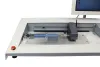
Understanding Adhesion Strength: 180 Degree Peel Test
Across many households and industries, consumers have developed a strong preference for and confidence in ‘Duct Tape’ for all types of uses and applications. This is mainly due to the adhesion strength.
1958
[Page extract]
CETIE Guide 6
This guide gives information on good practice for bottling still wine with an aluminium screw caps on a BVS type glass finish according to EN 16293, with redraw of the cap on application.
1959
[Page extract]
ASTM D5379/D5379M-05
This test method covers the shear properties of composite materials reinforced by high-modulus fibers. The composite materials are limited to continuous-fiber or discontinuous-fiber-reinforced composites in specific forms.
1960
[Page extract]
ASTM D3983
This test method describes a method of measuring the shear modulus and rupture stress in shear of adhesives in bonded joints.
1961
[Page extract]
TAPPI T 400
This method describes procedures for obtaining a representative sample for testing.
1962
[Page extract]
TAPPI T 840
This method describes a procedure for evaluating the adhesive used in glued lap joints of corrugated containers.
1963
[Page extract]
ISO 13954
ISO 13954 describes a peel test method for determining the decohesive resistance of polyethylene electrofusion socket assemblies for use in the distribution of fluids.
1964
[Page extract]
ISO 11747
ISO 11747 specifies a method for the determination of resistance to extrusion of milled rice kernels, parboiled or not parboiled, after cooking under specified conditions.
1965
[Page extract]
ASTM D6746-15
ASTM D6746 is a test standard that covers methods to evaluate a characteristic of raw rubber or unvulcanized rubber compounds that is designated as green strength.
1966
Event
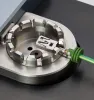
Wire Terminal Strength & Crimp Testing Webinar
The only way of really knowing the strength of a crimped terminal is to pull it.

1968
[Page extract]
BS 6319-11
BS 6319-11 is a test method for determining creep in compression and in tension for resin and polymer/cement compositions used in construction
1969

Event
Cap Closure and Removal Torque Testing
The primary objective for measuring and analyzing the torque characteristics of a container cap is to accurately determine not only the quality of the part or process, but also the root cause of a wide variety of defects.
1971

Event
Fundamentals of Food Texture Analysis
The primary goal for using instrumentation to measure texture is to capture an objective value to something that is typically evaluated very subjectively. Texture cannot be controlled unless it measured in a consistent and repeatable manner.
1972
[Page extract]
ASTM C297
This test method determines the flatwise tensile strength of the core, the core-to-facing bond, or the facing of an assembled sandwich panel.
1973
[Page extract]
FINAT FTM3
This test method allows the end user to determine the force required to separate the release backing from the pressure sensitive adhesive coated face material.
1974
[Page extract]
ASTM D3528
This test method covers the determination of the tensile shear strengths of adhesives for bonding metals when tested in an essentially peel-free standard specimen that develops adhesive stress distribution representative of that developed in a typical l