Search results
1526
[Page extract]
Maintenance and calibration of tear testers
To maintain accuracy and extend service life, regular maintenance and calibration are essential.
1527
[Page extract]
What is wing tear testing (Winkelmann/Graves method)?
Wing tear testing is a tensile-based method for flexible materials, in which a wing-shaped specimen is subjected to a controlled force until it tears.
1528
[Page extract]
Benefits of CMT testing for manufacturers
CMT testing offers multiple operational and commercial advantages:
1529

[Page extract]
Pharmaceuticals
The pharmaceutical industry is tightly controlled and subject to strict regulations, which means that testing is often at the heart of demonstrating compliance to the various international standards which govern the industry.
1530

[Page extract]
Electronics
Mecmesin's versatile force, materials, and torque testers are used by manufacturers worldwide to test the quality, strength, performance and safety of electrical, electronic and micro-electronic components and products.
1532

Event
2023 Medical Technology Ireland, Galway, Ireland - We would love to see you there!
Who should attend?
Quality Managers and design/product engineers involved in the development and production of medical and pharmaceutical devices and packaging.
What is the exhibition about?
1533
[Page extract]
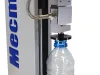
BS EN 50289-3-16
Communication cables, Electric cables, Communication transmission lines, Mechanical testing, Tensile testing, Tensile strength, Performance testing
1536
[Page extract]
ASTM D76-99
This specification covers operating characteristics of tensile testing machines for the determination of the force-elongation properties of textile materials.
1537
[Page extract]
ASTM D6109-19
ASTM D 6109 determines the flexural properties for any solid or hollow manufactured plastic lumber product of square, rectangular, round, or other geometric cross section that shows viscoelastic behavior.
1538
[Page extract]
ASTM D3528
This test method covers the determination of the tensile shear strengths of adhesives for bonding metals when tested in an essentially peel-free standard specimen that develops adhesive stress distribution representative of that developed in a typical l

1541
[Page extract]
ISO 36
ISO 36 determines the strength required to separate two plies of fabric bonded together with rubber, or a rubber and a fabric ply bonded together. This test is referred to as a “T-peel” test, because as the two adherends are pulled apart, they form the

1543
[Page extract]
ASTM D5672-09
This test method covers a screening type quality control test used to determine if flexible polyurethane foam cushions are within the specified grade range for firmness.
1544
[Page extract]
BS EN 12814-7
BS EN 12814-7 is a tensile test method with waisted test specimens for testing welded joints of thermoplastics semi-finished products.
1546
[Page extract]
ASTM D897-08
This test method covers the determination of the comparative tensile properties of the adhesive bonds of metal to metal when tested on standard shape specimens and under defined conditions of pretreatment, temperature, and testing machine speed.
1547
[Page extract]
BS ISO 5893
ISO 5893 specifies requirements for tensile-testing systems operating at constant rate of traverse and suitable for testing rubbers, plastics and adhesives, although any one system may only be applicable to a narrower range of materials.
1548
[Page extract]
ISO 37
ISO 37 specifies a method for the determination of the tensile stress-strain properties of vulcanized and thermoplastic rubbers.
This test standard is equivalent to BS ISO 37.
1549
[Page extract]
ASTM D1876
This test method measures the peel separation strength of two flexible materials that have been bonded together.