Search results
576
Event
Tensile Testing: Basics, Tips and Trends
Have you ever wondered if the seatbelt in your vehicle is strong enough to restrain you in a collision? How about the average person pulling the cork out of a wine bottle?
577
[Page extract]
Testing equipment and techniques
Mandrels
Custom-designed mandrels ensure closures are aligned and secured during testing. Correct mandrel design prevents slippage and eliminates fixture-induced variability.
578

Case study
Wall-mounted air freshener destructive loading evaluation
Requirement
The customer wished to apply a controlled load of 350N to a wall mounted air freshener, replicating the effect of a child standing on it. The load needed to be applied in turn to 4 different planes on the product, e.g.
579
Event
Needle Sharpness & Puncture Resistance Testing
Hypodermic needles are tested to determine how their design influences the ease of insertion into the skin in order to prevent patient pain and skin trauma.
580
[Page extract]
Understanding cone penetration testing
Cone penetration testing is a precision method used to determine a material's resistance to penetration by a standardised cone-shaped probe under specific force conditions.
581
Case study
Medical suture device calibration system
Requirement
A number of devices which 'crimp' a curved needle to a fine medical thread needed to be tested. The crimp force was applied horizontally pulling a lever on the device.
582
[Page extract]
Standards for compressive hardness testing
Internationally recognised standards ensure that compressive hardness tests are accurate, repeatable, and comparable.
583
Event
Medical Device Testing: Needle sharpness and syringe actuation testing (with 21 CFR Part 11 compliance)
Hypodermic needles are tested to determine their efficacy in piercing elastomer closures on vials and how their design influences the ease of insertion into the patient's skin, influencing pain and skin trauma.
The smooth and consistent operat
584
Case study
Child safety - force to extract lighter
Requirement
The customer manufactures lighters and is currently developing a case/guard designed to increase the safety for children.
585

Event
Materials Testing: Theory and Practice Pt. 1
Materials testing is often the last step in the manufacturing process. Yet, quality is the result of both the process and the material. If the material that goes into the product is inadequate or defective, then the product may be deficient or faulty.
586
[Page extract]
Test type
Mecmesin provides solutions for tests on products or materials that require the measurement of their physical strength. Typically this involves applying and recording the force to pull apart, push together, twist or turn.
587
Case study
Peel testing identity cards
Requirement
The customer produces identity cards with a laminated cover. The customer wanted to know that the adhesive used to bond the laminate and card together was strong enough to withstand a high rate of day-to-day usage.
588
Case study
Luer lock fastening and release torque
Customised engineering example
Luer lock test standards frequently call for measuring torque whilst simultaneously applying a pre-defined axial force.
589

Event
Materials Testing: Theory and Practice Pt. 2
Materials testing is often the last step in the manufacturing process. Yet, quality is the result of both the process and the material. If the material that goes into the product is inadequate or defective, then the product may be deficient or faulty.
590
[Page extract]
What is the Concora crush test?
Definition and overview
The Concora Crush Test (CCT) is a standardised method used to measure the crush strength of corrugated medium, specifically the fluted inner layer of corrugated board.
591
Event
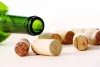
Essentials of Cork Pull & Cork Elasticity Testing
Cork stoppers are extremely successful wine bottle closures that have been in use from ancient times.
592

Event
Tensile Testing: Basics, Tips and Trends
Have you ever wondered if the seatbelt in your vehicle is strong enough to restrain you in a collision? How about the average person pulling the cork out of a wine bottle?
593

Event
Medical Devices: Syringe & Needle Testing Fundamentals
Every manufacturer (and patient) requires reliable needle and syringe function - ensuring safe & efficient drug administration.
Therefore, checking the performance and functionality of these medical devices is critical, with physical testi
594
Case study
Elongation test of infusion solution bag
Requirement
Fresenius Kabi is a global manufacturer of pharmaceutical products and delivery systems for infusion therapies and clinical nutrition.
595
[Page extract]
What we do
From easy-to-use, hand-held force and torque gauges to software-controlled tensile testers and torque systems, we have the solution for your tension, compression and torque testing requirements.
596
[Page extract]
Standards for box crush testing
ASTM D642-00
This standard specifies methods for determining the compressive resistance of shipping containers, both filled and empty.
597
Event
Tensile Testing: Basics, Tips and Trends
Have you ever wondered if the seatbelt in your vehicle is strong enough to restrain you in a collision? How about the average person pulling the cork out of a wine bottle?
598
Event
Materials Testing: Theory and Practice Pt. 2
Materials testing is often the last step in the manufacturing process. Yet, quality is the result of both the process and the material. If the material that goes into the product is inadequate or defective, then the product may be deficient or faulty.
599

Event
Packaging: Peel & Adhesion testing
Adhesion strength is a key factor in packaging, providing reliability and durability for a wide range of products.
Whether it's ensuring that a shipping box remains sealed during transit or that labels stay firmly attached to containers, the a
600
Case study
Lighting weld test
Requirement
A simple, low-cost fixture was specified by the customer for the Quality Control Laboratory. This was to hold a lighting assembly in a test where the welded contacts were pulled off.