Search results
1751
[Page extract]
ASTM D1894
This test method is used to measure the friction of plastic film and sheeting. It determines the kinetic (moving) and static (starting) resistance of one surface being dragged across another.
1752
Event
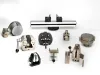
Webinar: Master Grips & Fixtures for Consistent Testing
When physically testing a material or component, the ability to apply load to a test specimen is important—but having the ability to apply that load correctly is just as crucial.
1753
[Page extract]
ASTM D2261
This test method covers the measurement of the tearing strength of textile fabrics by the tongue (single rip) procedure using a recording constant-rate-of-extension-type (CRE) tensile testing machine.
1754
[Page extract]
Jaws
Choosing the most appropriate jaw type for a tensile grip can be tricky. It is a balance between having sufficient hold of the specimen to prevent it slipping and not having too ‘aggressive’ a hold which damages the specimen.
1755
[Page extract]
ASTM D3968
This test method covers the measurement of rotational torques of Type IIIA child-resistant closures as a means of monitoring normal functioning of the child-resistant package.
1756
[Page extract]
UL 486A-B
UL 486A-B is a safety standard that outlines the requirements for wire connectors and soldering lugs used with electrical conductors.
1757
[Page extract]
TAPPI T 824
This test evaluates the ability of corrugating medium to contribute to the compression strength of a corrugated box.
1758
[Page extract]
ASTM D5379/D5379M-05
This test method covers the shear properties of composite materials reinforced by high-modulus fibers. The composite materials are limited to continuous-fiber or discontinuous-fiber-reinforced composites in specific forms.
1759
[Page extract]
ASTM D6049-03
This test method is capable of measuring and characterizing the rheological behavior (viscosity and elasticity) of unvulcanized raw rubbers and rubber compounds, relating to the macro structure of rubber polymers (average molecular weight, molecular wei
1760
[Page extract]
ASTM D2979
This test method covers measurement of the pressure-sensitive tack of adhesives.
1761
[Page extract]
ASTM F806-99a
ASTM F806 is a test method that covers determination of the short-time compressibility and recovery at room temperature of laminated composite gasket materials.
1762
[Page extract]
ASTM E2658-15
These practices cover procedures and requirements for the calibration and verification of testing machine speed by means of standards calibration devices
1763
[Page extract]
ISO 1827
ISO 1827 specifies methods for the determination of the modulus in shear and the strength of bonds of rubber to metal or other rigid plates, using rubber bonded between four parallel plates.
1764

Event
Fundamentals of Adhesion (Peel) Testing
There is a reason people reach for Duct Tape as a fix for almost everything – Adhesion Strength. From busted pipes to ripped furniture, the preference for a solution that “does not easily peel off” is the guiding principle for manufactures.
1765
[Page extract]
ASTM D1871
This test method is used to test the strength of adhesion of single-filament wire to vulcanized rubber compounds. It applies to wire made from brass, bronze or zinc coated steel wire.
1766
[Page extract]
TAPPI T 549
This method describes a horizontal plane procedure for the determination of the coefficient of static and kinetic friction of paper measured when sliding against itself.
1767
[Page extract]
ISO 7622-2
ISO 7622-2 specifies a method for the determination of the tensile strength, in the longitudinal, of steel cords constituting the carcass of conveyor belts.
It applies exclusively to conveyor belts with a steel carcass.
1768
[Page extract]
ASTM D5083-17
ASTM D5083 is a test method for measuring the force required to break a reinforced thermoset plastic specimen and the extent to which the specimen stretches or elongates to that breaking point.
1769
[Page extract]
ASTM D6264 /D6264M-17
In ASTM D6264 a quasi-static indentation (QSI) test method is used to obtain quantitative measurements of the damage resistance of a continuous-fibre-reinforced composite material to a concentrated indentation force
1770
[Page extract]
IFI 543
This standard provides a test method for determining the torque-tension relationship on both external and internal threaded fasteners for the purpose of measuring the frictional characteristics of the threaded fasteners.
1771
[Page extract]
ASTM D926-17
ASTM D926 is a test method that covers the determination of plasticity and recovery of unvulcanized rubber by means of the parallel plate plastometer. Uncompounded, compounded, and reclaim rubber may be tested.
1772
[Page extract]
BS EN 1394
BS EN 1394 is a tensile test method to determine the initial circumferential tensile strength of plastic pipes.
1773
[Page extract]
ASTM D3578
Scope... 1.1 This specification describes certain requirements for natural rubber gloves used in conducting medical examinations and diagnostic and therapeutic procedures. It also covers natural rubber gloves used in handling contaminated medical
1774
[Page extract]
BS EN ISO 1856
BS EN ISO 1856 is a test method that specifies three methods for determining the compression set of flexible cellular materials and applies only to latex and polyurethane foams of thickness greater than 2 mm.