Search results
2251
[Page extract]
ISO 4587
Specifies a method for determining the tensile lap-shear strength of rigid-to-rigid bonded assemblies using a standard specimen under specified conditions of preparation and testing. This test procedure does not provide design information.
2252
[Page extract]
ASTM D6049-03
This test method is capable of measuring and characterizing the rheological behavior (viscosity and elasticity) of unvulcanized raw rubbers and rubber compounds, relating to the macro structure of rubber polymers (average molecular weight, molecular wei
2253
[Page extract]
Why Mecmesin for breakaway torque testing?
Mecmesin offers an unmatched combination of reliability, support, and industry insight:
2254
[Page extract]
ISO 11607-1
Specifies the requirements and test methods for materials, preformed sterile barrier systems, sterile barrier systems and packaging systems that are intended to maintain sterility of terminally sterilized medical devices until the point of use.
2255
[Page extract]
ISO 13935-1
ISO 13935-1:2014 specifies a procedure to determine the seam maximum force of sewn seams when the force is applied perpendicularly to the seam. ISO 13935-1:2014 specifies the method known as the strip test.
2256
[Page extract]
TAPPI T 456
TAPPI T456 is a test method that describes the procedure for the determination of the tensile strength of paper and paperboard after saturation with water.
2257
[Page extract]
ISO 7622-2
ISO 7622-2 specifies a method for the determination of the tensile strength, in the longitudinal, of steel cords constituting the carcass of conveyor belts.
It applies exclusively to conveyor belts with a steel carcass.
2258
[Page extract]
ASTM D4776 / D4776M-18
ASTM D4776 is a test method used to determine the maximum adhesion force of tyre cords in rubber compounds.
2259
[Page extract]
TAPPI T 838
This method describes a procedure for determining the edgewise compressive strength, parallel to the flutes, of a short column of singe, double, or triple-wall corrugated fiberboard, in a neckdown, non reinforced, loading edge configuration.
2260
[Page extract]
Standards for yield point testing
Yield point testing protocols are defined by recognised international standards, including:
2261
[Page extract]
PSTC 8
Unwind adhesion is a quantitative measure of the degree of ease or difficulty in unwinding a roll of tape.
The test specimen shall be any 10 m (10 yard) or more roll of pressure sensitive tape - preferably 24 mm (1”) wide.
2262
[Page extract]
ASTM D876 - 13
ASTM D876 is a test method covering the testing of general-purpose (Grade A), low-temperature (Grade B), and high-temperature (Grade C)2 non-rigid vinyl chloride polymer tubing, or its copolymers with other materials, for use as electrical insulation.
2263
[Page extract]
BS EN 1155
Closing and check mechanisms, Door closers, Electrically-operated devices, Ironmongery (buildings), Classification systems, Design, Performance, Durability, Temperature-rise limit, Test equipment, Sampling methods, Performance testing, Temperature, Elec
2264
[Page extract]
BS EN ISO 14129
BS EN ISO 14129 is a test method used to determine the in-plane shear stress/shear strain response of fibre-reinforced plastic components.
2265
[Page extract]
ASTM D642-00
This test method covers compression tests on shipping containers (for example, boxes and drums) or components, or both. Shipping containers may be tested with or without contents.
2266
[Page extract]
ISO 8362-7
This part of ISO 8362 specifies aluminium-plastics combinations for the injection caps of injection vials, as specified in ISO 8362-1 and ISO 8362-4, where the plastics part does not overlap the diameter of the vial body. Section 6.2 Force required to
2267
[Page extract]
ISO 5079
Describes method and conditions of test for the determination of the breaking force and elongation at break of individual fibres in the conditioned or wet state. The test is restricted to the use of constant-rate-of-extension testing apparatus.
2268
[Page extract]
BS ISO 3384-1:2001+A1
BS ISO 3384-1 is a test method for determining the stress relaxation in compression of vulcanised rubber or thermoplastic.
2269
[Page extract]
ASTM D905-08
This test method covers the determination of the comparative shear strengths of adhesive bonds used for bonding wood and other similar materials, when tested on a standard specimen under specified conditions of preparation, conditioning, and loading in
2270
[Page extract]
BS EN 12655
Gymnastics equipment, Sports equipment, Safety measures, Equipment safety, Classification systems, Dimensions, Height, Strength of materials, Stability, Mechanical testing, Vertical, Horizontal, Performance testing, Instructions for use
2271
[Page extract]
ASTM D6534-05
This test method covers the determination of the peak force-to-actuate, sometimes called force-to-actuate (FTA), of a mechanical pump dispenser.
2272
[Page extract]
BS EN 863
Protective clothing, Clothing, Perforating tests, Penetration tests, Mechanical testing, Tensile testing, Test equipment, Specimen preparation, Performance testing
2273
Event
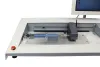
Understanding Adhesion Strength: 180 Degree Peel Test
Across many households and industries, consumers have developed a strong preference for and confidence in ‘Duct Tape’ for all types of uses and applications. This is mainly due to the adhesion strength.
2274
[Page extract]
ASTM D1002
This test method covers the determination of the apparent shear strengths of adhesives for bonding metals when tested on a standard single-lap-joint specimen and under specified conditions of preparation and test.
2275
[Page extract]
ASTM D7233-08
This test method covers a procedure for determining the number of fractures present when paintbrush filaments are bent.