Search results
2227
[Page extract]
BS EN ISO 1856
BS EN ISO 1856 is a test method that specifies three methods for determining the compression set of flexible cellular materials and applies only to latex and polyurethane foams of thickness greater than 2 mm.
2228
[Page extract]
BS EN 520
Plasterboard, Gypsum plaster, Boards, Wall linings, Construction systems parts, Performance, Strength of materials, Fire resistance, Sound insulation, Water vapour, Permeability, Thermal resistance, Performance testing, Dimensional measurement, Physical
2229
[Page extract]
ASTM D7084-04
1.1 This test method covers the determination of bulk crush strength of a bed of formed catalyst particles 1⁄32 to 3⁄16 in.
2230
[Page extract]
BS EN 12242
The BS EN 12242 test method is used to determine the peel strength of a touch and close (also known as “hook and loop”) fastener through a 180° peel test that is able to determine average peel and the peel strength characteristics of the product for a g
2231
[Page extract]
BS ISO 4919
Specifies a method for determination of tuft withdrawal force and is applicable to all carpets with a cut or loop pile yarn structure.
2232
[Page extract]
BS EN 14372
This document establishes minimum safety requirements and specifies appropriate test methods for children’s cutlery and feeding utensils designed for the use of children aged up to 3 years, with or without parental supervision.
2233
[Page extract]
BS EN ISO 13934-1
Part 1 of ISO 13934 specifies a procedure to determine the maximum force and elongation at maximum force of textile fabrics using a strip method.
2234

Case study
Bow attachment pull-off test on clothing
Requirement
The customer was a supplier to major UK clothing retailer Marks & Spencer, who stipulate that all fasteners and attachments must be tested to failure.
2235
[Page extract]
ASTM D2918
This test method provides data for assessing the durabilities of adhesive joints by means of T-peel type specimens stressed in contact with air, air in equilibrium with certain solutions, water, aqueous solutions, or other environments at various temper
2236
[Page extract]
ISO 29862
This test standard specifies a series of methods for the determination of peel adhesion properties of self adhesives tapes.
2237
[Page extract]
ASTM D3968
This test method covers the measurement of rotational torques of Type IIIA child-resistant closures as a means of monitoring normal functioning of the child-resistant package.
2238
[Page extract]
BS EN 862
Packaging. Child resistant packaging. Requirements and testing procedures for non-reclosable packages for non-pharmaceutical products
2239
[Page extract]
ASTM D3106
This test method covers the determination of the permanent deformation of bare, continuous elastomeric monofilaments and filament yarns made from rubber, spandex, anidex, or other elastomers subjected to prolonged periods of tension.
2240
[Page extract]
ASTM D3480
These test methods cover the measurement of the downward force required to open or activate child-resistant snap-engagement packages.
2241
[Page extract]
TAPPI T 541
This method describes a procedure for measuring the internal fiber bond strength (z-direction tensile strength) of paperboard using an instrument that subjects a normal separation force to 6.45-cm2 (1-in2) specimen.
2242
[Page extract]
ISO 7623
ISO 7623 specifies a method for determining the bond strength of metal cords to their surrounding coating, either in the initial state or after thermal treatment.
2243
[Page extract]
PSTC 8
Unwind adhesion is a quantitative measure of the degree of ease or difficulty in unwinding a roll of tape.
The test specimen shall be any 10 m (10 yard) or more roll of pressure sensitive tape - preferably 24 mm (1”) wide.
2244
Event
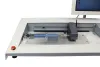
Understanding Adhesion Strength: 180 Degree Peel Test
Across many households and industries, consumers have developed a strong preference for and confidence in ‘Duct Tape’ for all types of uses and applications. This is mainly due to the adhesion strength.
2245
[Page extract]
ASTM D876 - 13
ASTM D876 is a test method covering the testing of general-purpose (Grade A), low-temperature (Grade B), and high-temperature (Grade C)2 non-rigid vinyl chloride polymer tubing, or its copolymers with other materials, for use as electrical insulation.
2246
[Page extract]
BS EN 1155
Closing and check mechanisms, Door closers, Electrically-operated devices, Ironmongery (buildings), Classification systems, Design, Performance, Durability, Temperature-rise limit, Test equipment, Sampling methods, Performance testing, Temperature, Elec
2247
[Page extract]
BS EN ISO 14129
BS EN ISO 14129 is a test method used to determine the in-plane shear stress/shear strain response of fibre-reinforced plastic components.
2248
[Page extract]
Standards for yield point testing
Yield point testing protocols are defined by recognised international standards, including:
2249
[Page extract]
ASTM D642-00
This test method covers compression tests on shipping containers (for example, boxes and drums) or components, or both. Shipping containers may be tested with or without contents.
2250
[Page extract]
ISO 8362-7
This part of ISO 8362 specifies aluminium-plastics combinations for the injection caps of injection vials, as specified in ISO 8362-1 and ISO 8362-4, where the plastics part does not overlap the diameter of the vial body. Section 6.2 Force required to