Search results
1101
[Page extract]
Understanding test types
Material testing uses a variety of methods to assess different mechanical properties. Selecting the right test depends on the intended application and relevant standards.
Examples include:
1102
[Page extract]
ISO 252
ISO 252 specifies two test methods, A and B, for determining the adhesion strength between constitutive elements of a conveyor belt, i.e. between plies and between covers and carcass.
1103
[Page extract]
ASTM D1710
Among tests for electrical and dimensional (temperature) stability, includes methods for tensile characteristics.
1104
[Page extract]
Troubleshooting and best practices
Secure adhesive firmly in the fixture to prevent slippage
Clean substrates between tests to remove residue
Maintain consistent loop dimensions using fixture guides
Control temperature and humidity to match the test s
1105
[Page extract]
ASTM D6862-11
This test method is useful for acceptance and quality control testing. Adherends, application procedure, and sample conditioning shall be as agreed upon by the manufacturer and the user of the adherends and the adhesive.
1106
[Page extract]
Simplify data analysis in force, materials and torque testing
Test calculations are the values derived from raw measurement data, such as peak force, torque angle, or modulus of elasticity. With advanced software, these are now calculated instantly and with high precision, replacing error-prone manual methods.
1107
[Page extract]
Standards for the 90-degree peel test
The 90-degree peel test is defined by several recognised international standards, which provide consistent methodology and reporting requirements:
1108
[Page extract]
ASTM D412-16
ASTM D412 is a test standard for testing the tensile stress-strain properties of thermoset rubbers and thermoplastic elastomers. The standard is divided into two test methods.
1109
[Page extract]
ISO 13939
Describes a method of comparing the performance test results of foil journal bearings, which are lubricated by air (gas) and supported by hydrodynamic force generated by the rotation of the rotating shaft.
1110
[Page extract]
Industry standards for torque to turn testing
There is no single universal standard for all torque to turn testing, but the method aligns with several sector-specific standards. Examples include:
1111

Event
Needle Sharpness & Puncture Resistance Testing
Hypodermic needles are tested to determine how their design influences the ease of insertion into the skin, patient pain and skin trauma.
1112
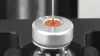
Event
Needle Sharpness & Puncture Resistance Testing
Hypodermic needles are tested to determine how their design influences the ease of insertion into the skin in order to prevent patient pain and skin trauma.
1113
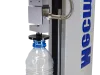
Event
Compression Testing in Top Load Applications
A typical challenge in packaging, and bottling applications is trying to balance product integrity, where the container might be too weak and crush under load, and excessive raw material cost, where the container is too strong.
1114

Case study
Adjustable spectacles torque test
Customised engineering example
Adlens manufacture adaptive spectacle lenses, where the optical power is adjusted by a side dial which is then removed.
1115
[Page extract]
Standards for extrusion testing
Although there are fewer dedicated standards for food extrusion than for plastics or metals, recognised guidelines help ensure repeatability and comparability. Examples include:
1116
[Page extract]
Standards for tear resistance testing
While the core principle of wing tear testing remains the same, each standard specifies unique specimen shapes, notch sizes and test speeds. Adhering to these requirements ensures results are valid and comparable.
1117
[Page extract]
BS EN 60794-1-21:2015+A1
This part of IEC 60794 applies to optical fibre cables for use with telecommunication equipment and devices employing similar techniques, and to cables having a combination of both optical fibres and electrical conductors.
1118

[Page extract]
Construction
Mecmesin systems and gauges are designed for the application of international and industry standards for quality and safety...
1119

Event
Essentials of Adhesion (Peel) Testing
Across many households and industries, consumers have developed a strong preference for and confidence in ‘Duct Tape’ for all types of uses and applications. This is mainly due to the adhesion strength.
1120

[Page extract]
Torque testing
Torque testing is a way of determining how an object will react when it is being turned - during normal operation or being twisted until it deliberately fails or breaks.
1121
Case study
DVD removal force test
Requirement
The customer, a leading supplier of boxed DVD’s, had experienced a wide variation in the amount of force required to remove the DVD from the central spigot of the case.
1122
[Page extract]
ASTM D882-18
ASTM D882 is a test method that covers the determination of tensile properties of plastics in the form of thin sheeting and films (less than 1.0 mm (0.04 in.) in thickness). It is used to measure tensile properties including ultimate tensile
1123
[Page extract]
Challenges and considerations
Even with well-defined standards, tear resistance testing can be influenced by:
1124
Case study
Peel test of semi-rigid packaging for medical device
Customised engineering example
Our client needed to test the peeling quality of a Tyvek® paper lid used to seal a sterile, semi-rigid thermoformed plastic tray containing pre-filled syringes.
1125
Case study
Injection moulded assembly integrity
Customised engineering example
Plastic injection-moulded subassemblies are often clipped or welded together, and the integrity of the whole must be tested at several points.