Search results
926

Event
Cap Closure and Removal Torque Testing
The primary objective for measuring and analyzing the torque characteristics of a container cap is to accurately determine not only the quality of the part or process, but also the root cause of a wide variety of defects.
927
Event
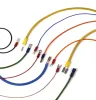
Tensile Testing for Wiring Harness Connections
The only way of really knowing the strength of a crimped terminal is to pull it. This can reveal production problems, where strand nicks, incorrect crimp height, or effects from changes in terminal supply, may not be clearly apparent.
928

Event
Wine & Spirits: Pull Tab & Twist Cap Testing
Canned wine and seltzer drinks have a clear upside that makes their popularity soar: Convenience. As well as being lighter to carry, less potentially fragile, eliminating the corkscrew, and even a glass makes it ideal for social gatherings.
929
[Page extract]
ASTM D4917-90
1.1 This test method describes a horizontal plane procedure for the determination of the coefficient of static and kinetic friction of paper measured when sliding against itself.
930
[Page extract]
BS EN ISO 19011:2011
Provides the fundamental knowledge needed for auditing management systems and has been expanded to reflect modern thinking and the intricacies of auditing multiple management system standards (MSS).
931
[Page extract]
ASTM E1012-12e1
It has been shown that bending stresses that inadvertently occur due to misalignment between the applied force and the specimen axes during the application of tensile and compressive forces can affect the test results.
932
[Page extract]
ASTM F2258-05
This test method is intended to provide a means for comparison of the adhesive strengths of tissue adhesives intended for use as surgical adhesives or sealants, or both, on soft tissue.
933
Event
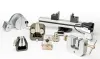
Webinar: Essentials of Grip & Fixture Selection in Force & Torque Testing
For a test to work, the test system needs to properly interface with its specimen.
934
[Page extract]
BS EN ISO 9001
ISO 9001 has been revised to reflect the many changes in the way we now do business – new technology, greater access to information, higher customer expectations, globalization and increasing importance of service industries.
935

Event
Rice Texture Analysis
Rice is a staple food for billions of people worldwide, and its quality is intrinsically linked to its texture.
936
[Page extract]
BS EN ISO 13127
This standard is only to verify that panel-tested closures with minor modifications are still compliant, by applying mechanical tests as more economical than further full panel tests with children and with adults.
937
[Page extract]
ASTM D7233-08
This test method covers a procedure for determining the number of fractures present when paintbrush filaments are bent.
938

Event
Top-load testing: Ensuring packaging integrity from production to transport
Top-load testing is the method used to simulate and measure the force exerted on packaging containers during production, filling, capping, storage, and transport.
939

[Page extract]
Chemicals & Adhesives
Chemicals, adhesives and coatings play a crucial role in almost every area of our lives, so testing their performance is vital.
940
[Page extract]
ASTM D5766 / D5766-M
ASTM D5766 is a test method to determine the open-hole tensile strength of multidirectional polymer matrix composite laminates reinforced by high-modulus fibres.
941

Event
Texture Testing for Bakery Applications
The primary goal for using instrumentation to measure texture is to capture an objective value to something that is typically evaluated very subjectively. Texture cannot be controlled unless it measured in a consistent and repeatable manner.
942
[Page extract]
ASTM F2999
1.1 This specification establishes requirements and test methods for specified elements and for certain mechanical hazards in adult jewelry.
943
Event
Tensile Testing for Wiring Harness Connections
The only way of really knowing the strength of a crimped terminal is to pull it. This can reveal production problems, where strand nicks, incorrect crimp height, or effects from changes in terminal supply, may not be clearly apparent.
944
[Page extract]
ASTM F88/F88M
ASTM F88 test method covers the measurement of the strength of seals in flexible barrier materials. Seal strength is the tensile strength of the seal at ambient temperature.
945
[Page extract]
ASTM B571
This practice covers simple, qualitative tests for evaluating the adhesion of metallic coatings on various substances.
946

Event
Fundamentals of Texture Testing Analysis
The primary goal for using instrumentation to measure texture is to capture an objective value to something that is typically evaluated very subjectively. Texture cannot be controlled unless it measured in a consistent and repeatable manner.
947
[Page extract]
ASTM D2659
ASTM D2659 determines the mechanical properties of blown thermoplastic containers under columnar crush conditions at a steady rate of compression. Any container, whether blown commercially or in the laboratory, may be used as the test specimen.
948

Event
Automotive Component Torque Testing
This webinar will focus on the measurement of the torque resistance in knobs, switches, and torsion springs, which are among several components in automobiles that require testing to ensure quality, performance, and safety.
949

[Page extract]
Government
The general government sector covers institutions and public bodies where regulations and standards must be strictly adhered to.
950
[Page extract]
CETIE Guide 1
This guideline applies to the capping of still wines with a cork mouth finish as per CETIE data sheet GME 50.01 which has been used as a base for the European standard EN 12726. Contains reference to 'extraction force', 'cork dimensional recovery', 'ch