Search results
1226
[Page extract]
ASTM D1876
This test method measures the peel separation strength of two flexible materials that have been bonded together.
1227
[Page extract]
ASTM D6117-18
ASTM D6117 covers the evaluation of fastener use with “as manufactured” plastic lumber and shapes through the use of two different testing procedures:
1228
[Page extract]
ASTM C674
These test methods cover determination of the modulus of rupture and the modulus of elasticity of fired ceramic whitewares bodies, formed by any fabrication method, and are applicable to both glazed and unglazed test specimens.
1229
[Page extract]
ASTM D1894
This test method is used to measure the friction of plastic film and sheeting. It determines the kinetic (moving) and static (starting) resistance of one surface being dragged across another.
1230
[Page extract]
ASTM D876 - 13
ASTM D876 is a test method covering the testing of general-purpose (Grade A), low-temperature (Grade B), and high-temperature (Grade C)2 non-rigid vinyl chloride polymer tubing, or its copolymers with other materials, for use as electrical insulation.

1232
[Page extract]
ISO 11608-5
This part of ISO 11608 specifies requirements and test methods for the automated functions of needle-based injection systems with automated functions (NIS-AUTO), for the administration of medicinal products in humans.
1234
[Page extract]
ASTM D5934-02
ASTM D5934 specifies the use of controlled rate of loading mechanical instrumentation on rectangular plastic bars molded directly or cut from sheets, plates, or molded shapes via three-point loading bending techniques to obtain material properties such
1235
[Page extract]
ASTM D1623
ASTM D1623 determines the tensile and tensile adhesion properties of rigid cellular plastics materials and foam. These are often used as insulation and structural materials in the aerospace, automotive and construction industries.
1236
[Page extract]
ISO 1805
ISO 1805 specifies a method of testing the breaking force and knot breaking force of netting yarns for fishing nets.
1237
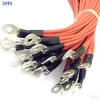
Event
Wire Crimp & Weld Testing Webinar
The only way of really knowing the strength of a crimped terminal is to pull it.
1238
[Page extract]
ASTM D6324-11
ASTM D6324 covers the minimum requirements for individually packaged male condoms made from polyurethane. This specification also describes the minimum inspection and quality levels that shall be utilized in referee tests.
1239

Event
Tensile Testing: Basics, Tips and Trends
Have you ever wondered if the seatbelt in your vehicle is strong enough to restrain you in a collision? How about the average person pulling the cork out of a wine bottle?
1240

Event
Webinar: Adhesion/Peel strength testing
There is a reason people reach for duct tape as a fix for almost everything – adhesion strength.
From busted pipes to ripped furniture, the preference for a solution that “does not easily peel off” is the guiding principle for manufacturers.
1241
[Page extract]
BS 5338
Recommendations on materials, basic design factors, component design, working practice, inspection. Appendices on mechanical properties and dimensional stability.
1242

Event
Fundamentals of Compression Testing
How much force is required to register a command when you click your computer mouse?
How much force can a water bottle take before it collapses in its case under a stack?
1243
[Page extract]
BS 1726-1
Provides guidance on methods of specifying and tolerancing hot coiled compression springs, and cold coiled springs that fall outside the size range limits specified in BS EN 15800.
1244
[Page extract]
ISO 21180
ISO 21180 specifies a test method for the determination of the maximum tensile strength of light conveyor belts.
1245
[Page extract]
BS EN ISO 6789
Wrenches, Torque, Hand tools, Screwdrivers, Marking, Approval testing, Quality control, Calibration
1246
[Page extract]
ISO 12625-4
Specifies a test method for the determination of the tensile strength, stretch at break and tensile energy absorption of tissue paper and tissue products. It uses a tensile-testing apparatus operating with a constant rate of elongation.
1247
[Page extract]
ISO 527-5
ISO 527-5 specifies the test conditions for the determination of the tensile properties of unidirectional fibre-reinforced plastic composites, based upon the general principles given in ISO 527-1.
1248

Event
Packaging: Establishing repeatability and consistency
Ensuring the quality and durability of packaging is crucial for maintaining product integrity from production to delivery.
1249
[Page extract]
ISO 813
ISO 813 specifies a method for the determination of the adhesive strength of a vulcanized or thermoplastic rubber bonded to a rigid substrate, using a test piece comprising a strip of rubber bonded to a single plate of rigid material.