Search results
2051

Event
Medical Devices: General testing with 21 CFR Part 11 compliance
Reliable results, trusted compliance: 21 CFR Part 11's role in securing medical device quality testing.
Quality testing of Medical Devices ranges from syringe actuation (break loose and glide), needle sharpness and adhesion strength to Child R
2052
[Page extract]
ASTM D3846
ASTM D3486 is a test method used for evaluating the in-plane strength of reinforced thermosetting plastics in flat sheet form in thicknesses ranging from 2.54 to 6.60 mm.
2053
[Page extract]
ASTM D1894
This test method is used to measure the friction of plastic film and sheeting. It determines the kinetic (moving) and static (starting) resistance of one surface being dragged across another.
2054
Event
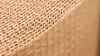
Packaging: Edge Crush & Carton Crush testing
The Edge Crush Test (ECT) and Carton Crush Test (CCT) are codified international test methodology. They are used in the packaging industry to assess the strength and durability of corrugated boxes or paperboard materials and others.
2055
[Page extract]
BS EN 12562
Synthetic fibres, Polyamide fibres, Aramide fibres, Textile products, Textile testing, Yarn, Filament yarns, Filaments, Filament (textile fibre), Yarn testing, Yarn linear density determination, Elongation at fracture, Elongation, Force measurement, Mec
2056
[Page extract]
ASTM D2261
This test method covers the measurement of the tearing strength of textile fabrics by the tongue (single rip) procedure using a recording constant-rate-of-extension-type (CRE) tensile testing machine.
2057
Event
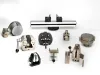
Webinar: Master Grips & Fixtures for Consistent Testing
When physically testing a material or component, the ability to apply load to a test specimen is important—but having the ability to apply that load correctly is just as crucial.
2058
[Page extract]
BS EN ISO 10618
Carbon fibres, Mechanical properties of materials, Tensile strength, Tensile testing, Plastics, Impregnated materials, Yarn, Modulus of elasticity, Strain, Tensile strain, Loading, Reinforcing materials, Composite materials, Test equipment, Test specime
2059
[Page extract]
ASTM D3968
This test method covers the measurement of rotational torques of Type IIIA child-resistant closures as a means of monitoring normal functioning of the child-resistant package.
2060
[Page extract]
UL 486A-B
UL 486A-B is a safety standard that outlines the requirements for wire connectors and soldering lugs used with electrical conductors.
2061
[Page extract]
ASTM D6049-03
This test method is capable of measuring and characterizing the rheological behavior (viscosity and elasticity) of unvulcanized raw rubbers and rubber compounds, relating to the macro structure of rubber polymers (average molecular weight, molecular wei
2062
[Page extract]
ASTM D2979
This test method covers measurement of the pressure-sensitive tack of adhesives.
2063
[Page extract]
ASTM F806-99a
ASTM F806 is a test method that covers determination of the short-time compressibility and recovery at room temperature of laminated composite gasket materials.
2064
Event
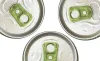
Wine & Spirits: Pull Tab & Twist Cap Testing
Canned wine and seltzer drinks have a clear upside that makes their popularity soar: Convenience. As well as being lighter to carry, less potentially fragile, eliminating the corkscrew, and even a glass makes it ideal for social gatherings.
2065
[Page extract]
Jaws
Choosing the most appropriate jaw type for a tensile grip can be tricky. It is a balance between having sufficient hold of the specimen to prevent it slipping and not having too ‘aggressive’ a hold which damages the specimen.
2066
[Page extract]
ISO 1827
ISO 1827 specifies methods for the determination of the modulus in shear and the strength of bonds of rubber to metal or other rigid plates, using rubber bonded between four parallel plates.
2067
[Page extract]
TAPPI T 824
This test evaluates the ability of corrugating medium to contribute to the compression strength of a corrugated box.
2068
[Page extract]
ASTM D5379/D5379M-05
This test method covers the shear properties of composite materials reinforced by high-modulus fibers. The composite materials are limited to continuous-fiber or discontinuous-fiber-reinforced composites in specific forms.
2069
[Page extract]
ASTM D1871
This test method is used to test the strength of adhesion of single-filament wire to vulcanized rubber compounds. It applies to wire made from brass, bronze or zinc coated steel wire.
2070
[Page extract]
TAPPI T 549
This method describes a horizontal plane procedure for the determination of the coefficient of static and kinetic friction of paper measured when sliding against itself.
2071
[Page extract]
ISO 7623
ISO 7623 specifies a method for determining the bond strength of metal cords to their surrounding coating, either in the initial state or after thermal treatment.
2072
[Page extract]
ASTM E2658-15
These practices cover procedures and requirements for the calibration and verification of testing machine speed by means of standards calibration devices
2073
[Page extract]
ASTM D1566
ASTM D1566 is a source of reference for definitions of technical terms used in the rubber industry
Standards can be obtained from appropriate standard authorities.
2074
[Page extract]
BS EN ISO 13262
BS EN ISO 13262 is test method to determine the tensile strength of seams on thermoplastics spirally-formed structured-wall pipes.