Search results
326
[Page extract]
Introduction to torque testing
Torque testing is a vital part of packaging quality control.
327
[Page extract]
Applications and importance of breaking torque testing
Applications across sectors
Breaking torque testing plays a central role in confirming that products are not only functional, but also durable and safe throughout their lifecycle.
328
[Page extract]
Understanding yield point in material testing
Yield point analysis is used across multiple industries to ensure materials meet strict performance criteria:
329
[Page extract]
Benefits and limitations of compressive shear testing
Advantages
High precision - accurate measurement of shear strength under controlled compression
<
330
[Page extract]
Methods for lap shear testing
Single lap shear test procedure
In a single lap shear test, two specimens are bonded with an adhesive in an overlapping configuration.
331
[Page extract]
Electrical switches and connectors
Switches and connectors may be low-cost simple electro-mechanical devices but they are ubiquitous in millions of products and devices we use every single day.
332

Event
Fundamentals of Adhesion (Peel) Testing
There is a reason people reach for Duct Tape as a fix for almost everything – Adhesion Strength. From busted pipes to ripped furniture, the preference for a solution that “does not easily peel off” is the guiding principle for manufactures.
333

Event
Fundamentals of Texture Testing Analysis
The primary goal for using instrumentation to measure texture is to capture an objective value to something that is typically evaluated very subjectively. Texture cannot be controlled unless it measured in a consistent and repeatable manner.
334

Event
Understanding Top-Load Testing - Live Application Demo
Packaging manufacturers use top-load or crush testing to ensure packaging integrity, and to eliminate material excess while maintaining quality.
335

Event
Fundamentals of Food Texture Testing
Texture cannot be controlled unless it is measured in a consistent and repeatable manner.
336

Event
Live Demonstration: Wire Crimp Tensile Testing
Wire crimp tensile testing provides confidence in the integrity and performance of crimped connections, ensuring reliability, safety, and compliance with industry standards.
337
[Page extract]
ISO 2409
Describes a test method for assessing the resistance of paint coatings to separation from substrates when a right-angle lattice pattern is cut into the coating, penetrating through to the substrate.
338
[Page extract]
BS EN ISO 9004
BS EN ISO 9004 provides guidance on achieving sustainable success through quality management. The European standard can be applied to all organisations across all sectors.
339
[Page extract]
ASTM D2063/D2063M
This test method measures torque retention properties of container/continuous thread closure systems with the use of a non-automated, spring torque-meter (with either a dial indicator or a digital readout) or a torque wrench. evaluation.
340
Event
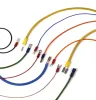
Tensile Testing for Wiring Harness Connections
The only way of really knowing the strength of a crimped terminal is to pull it. This can reveal production problems, where strand nicks, incorrect crimp height, or effects from changes in terminal supply, may not be clearly apparent.
341

Event
Tensile Testing for Wiring Harness Connections
The only way of really knowing the strength of a crimped terminal is to pull it. This can reveal production problems, where strand nicks, incorrect crimp height, or effects from changes in terminal supply, may not be clearly apparent.
342
Event
Tensile Testing for Wiring Harness Connections
The only way of really knowing the strength of a crimped terminal is to pull it. This can reveal production problems, where strand nicks, incorrect crimp height, or effects from changes in terminal supply, may not be clearly apparent.
343

Event
Webinar: Essentials of Adhesion/Peel strength testing
There is a reason people reach for duct tape as a fix for almost everything – adhesion strength.
344
[Page extract]
ISO 8510-2
Specifies a 180° peel test for the determination, under specified conditions, of the peel resistance of a bonded assembly of two adherends where one adherend is flexible and the other is rigid.
345
[Page extract]
ISO 814
ISO 814 specifies a method for determining the adhesion strength of rubber-to-metal bonds where the rubber part is assembled between two parallel metal plates, using the adhesive system under investigation
346
[Page extract]
ASTM F2824-10
1.1 This test method describes a method for the measurement of mechanical seal strength while separating the entire lid (cover/membrane) from a rigid or semi-rigid round container. 1.2 This test method differs from Test Method F88.
347

Event
Fundamentals of Compression Testing
How much force is required to register a command when you click your computer mouse?
How much force can a water bottle take before it collapses in its case under a stack?
348

Event
Torque, force, and texture testing: How to elevate cosmetic quality standards
Cosmetic products require testing for objective texture analysis as well as the performance of applicators, dispensers, and packaging.
349
[Page extract]
ISO 505
ISO 505 specifies a method of test for the measurement of the propagation resistance of an initial tear in textile conveyor belts, either in full thickness or of the carcass only.
350
Event
Fundamentals of Compression Testing
How much force is required to register a command when you click your computer mouse?
How much force can a water bottle take before it collapses in its case under a stack?