Search results
1176
[Page extract]
ISO 12192
Specifies a method for the determination of the edgewise compressive strength (ring crush resistance) of paper and paperboard, especially board used in the manufacture of fibreboard shipping containers.
1177
[Page extract]
ASTM D3164
Test method ASTM D3164 is used to produce shear strength data for joints to compare adhesives or evaluation surface treatments. Shear joints impose uniform stresses across the bond area which results in the highest possible joint strength.
1178
[Page extract]
ISO 6922
Specifies a method for determining the bond strength of a butt joint when subjected to tensile force. The method is applicable to all types of adhesives.
1179
[Page extract]
ASTM D3931
This test method covers the determination of comparative shear properties of gap-filling adhesives in wood-to-wood joints at specified thicknesses of bondline in the dry condition, when tested on standard specimens under specified conditions of preparat
1180
[Page extract]
BS EN ISO 844
ISO 844 specifies a method of determining a) the compressive strength and corresponding relative deformation, or b) the compressive stress at 10 % relative deformation, and c) when desired, the compressive modulus of rigid cellular plastics.
1181
[Page extract]
ASTM D1938
ASTM D1938 covers the determination of the force necessary to propagate a tear in plastic film and thin sheeting by a single-tear method. It rates the tear-propagation resistance of various plastic films and thin sheeting of comparable thickness.
1182

Event
Child Resistant Closure Testing
Medical, Pharmaceutical and Chemical Packaging takes product safety seriously.
1183
[Page extract]
ASTM D4482-11
ASTM D4482 is a test method used to determine the fatigue life of rubber compounds undergoing a tensile-strain cycle. During part of the cycle, the strain is relaxed to a zero value.
1184
[Page extract]
ASTM C1576
This standard test method covers the determination of slow crack growth (SCG) parameters of advanced ceramics by using constant stress flexural testing in which time to failure of flexure test specimens is determined in four-point flexure as a function
1185

Event
Materials Testing: Theory and Practice Pt. 1 & 2
Materials testing is often the last step in the manufacturing process. Yet, quality is the result of both the process and the material. If the material that goes into the product is inadequate or defective, then the product may be deficient or faulty.
1186
[Page extract]
ASTM D3787
This test method describes the measurement for bursting strength with a ball burst strength tester of textiles or garments that exhibit a high degree of ultimate elongation.
1187

Event
Tensile Testing: Basics, Tips, & Trends
Have you ever wondered if the seatbelt in your vehicle is strong enough to restrain you in a collision? How about the average person pulling the cork out of a wine bottle?
1188
[Page extract]
ISO 1798
ISO 1798 specifies a method for determining the strength and deformation properties of flexible cellular materials when a test piece is extended at a constant rate until it breaks.
This test standard is equivalent to BS EN ISO 1798:2008
1189
[Page extract]
BS EN 671-1
Fire hydrants, Fire hoses, Firefighting equipment, Flexible pipes, Fire hose reels, Hose reels, Fire safety in buildings, Performance, Approval testing, Corrosion tests, Ageing tests, Flow measurement, Endurance testing, Impact testing, Pressure testing
1190
[Page extract]
ASTM D3480
These test methods cover the measurement of the downward force required to open or activate child-resistant snap-engagement packages.
1191
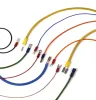
Event
Tensile Testing for Wiring Harness Connections
The only way of really knowing the strength of a crimped terminal is to pull it. This can reveal production problems, where strand nicks, incorrect crimp height, or effects from changes in terminal supply, may not be clearly apparent.
1192
[Page extract]
ISO 36
ISO 36 determines the strength required to separate two plies of fabric bonded together with rubber, or a rubber and a fabric ply bonded together. This test is referred to as a “T-peel” test, because as the two adherends are pulled apart, they form the
1193
[Page extract]
ASTM D 2979
1.1 This test method covers measurement of the pressure sensitive tack of adhesives.

1196
[Page extract]
ASTM D380
ASTM D380 is a set of test methods for determining testing and inspection procedures for rubber hoses e.g. hydraulic hoses and automotive hoses.
1197
[Page extract]
ISO 8033
ISO 8033 specifies methods for the determination of the adhesion between lining and reinforcement, between cover and reinforcement, between reinforcement layers, between cover and outer lamination (thin layer of material outside the cover for protection
1198
[Page extract]
ASTM D2370
This test method covers the determination of the elongation, tensile strength, and stiffness (modulus of elasticity) of organic coatings when tested as free films.
1199
[Page extract]
ASTM d6108-19
ASTM D6108 covers the determination of the mechanical properties of plastic lumber and shapes, when the entire cross-section is loaded in compression at relatively low uniform rates of straining or loading.
1200
[Page extract]
BS 6319-11
BS 6319-11 is a test method for determining creep in compression and in tension for resin and polymer/cement compositions used in construction