Search results
476
[Page extract]
Power your torque testing
Sophisticated power - easy to use
Looking for an automated torque testing system to improve the accuracy and repeatability of your measurements compared to manual torque testers?
477
[Page extract]
bursting strength (sheet rupture)
Bursting strength is the capacity of a material or product to maintain in continuity when subjected to pressure.
478
Accessory
Horizontal feet kit for 2.5 kN single-column test stand (on side)
PDV11065
Feet kit for the horizontal operation of a MultiTest motorised test.
When fitted the front panel of the test stand will be on its side for ease-of-operation by the user.
479
Accessory
Horizontal feet kit for 2.5 kN single-column test stand (on side)
PDV11065
Feet kit for the horizontal operation of a MultiTest motorised test.
When fitted the front panel of the test stand will be on its side for ease-of-operation by the user.
480
Product
Penetrometer zum Testen der Druckfestigkeit von jungem Spritzbeton
Spritzbeton-Penetrometer
850-611
Der Spritzbeton-Penetrometer ist ein komplettes, tragbares Prüfsystem für die Prüfung der Druckfestigkeit in der ersten Phase von frisch gespritzem Beton gemäß der Norm BS EN 14488-2 (Methode A).
Es liefert genaue Messwerte der Kräfte,…
481
Accessory
Event-input cable for "switch-testing" on NEW(2011 - present) MultiTest/Vortex/Helixa-i and 'xt' stands
351-080
Event-Input Cable comprising 25-pin connector to split-connection fitted with a pair of 'crocodile clips'.
Allows a switch to be tested and the force/displacement/time to be identified when the switch closes or opens.
For use with the 'i' and 'xt'…
482
Accessory
Horizontal feet kit for 2.5 kN single-column test stand (on side)
PDV11065
Füße für die waagerechte Bedienung eines MultiTest motorisierten Prüfstands.
Wenn die Frontplatte des Prüfstands angebracht ist, befindet sie sich auf der Seite, um dem Benutzer eine einfache Bedienung zu ermöglichen.
483

Event
Medical Device Testing: Torque testing of Child Resistant Closures (CRC) with 21 CFR Part 11 compliance
Torque testing of Child Resistant Closures (CRC) with 21 CFR Part 11 compliance
484
[Page extract]
Mecmesin solutions for tensile and compression testing
Mecmesin offers a comprehensive range of tensile and compression testing equipment, delivering precision, repeatability and compliance with recognised international standar
485
[Page extract]
Standards for bulk analysis testing
Applicable standards and protocols
To ensure consistency and regulatory compliance, bulk testing is often carried out in accordance with established standards. These include:
486
[Page extract]
Industry standards for material testing
Relevant standards
MIL-STD-202 - Covers mechanical and environmental tests for electronic components, including terminal bending and pull tests.
487
[Page extract]
Why Mecmesin for pull-off and pull-out testing
Mecmesin designs and manufactures tensile and adhesion testing equipment for both destructive and non-destructive pull-off and pull-out applications.
488
[Page extract]
Why Mecmesin for puncture and shear testing
Mecmesin offers testing systems for puncture and shear applications across films, fabrics, and boards. Our solutions are engineered for accuracy, repeatability, and compliance with international standards.
489
[Page extract]
Plastic components and sub-assemblies
The successful design and production of plastic components requires careful attention to be paid to many elements. The choice of plastic material depends on the desired performance characteristics - will parts be under constant load?
490
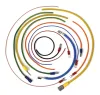
Event
Tensile Testing for Wiring Harness Connections
The only way of really knowing the strength of a crimped terminal is to pull it. This can reveal production problems, where strand nicks, incorrect crimp height, or effects from changes in terminal supply, may not be clearly apparent.
491
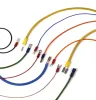
Event
Tensile Testing for Wiring Harness Connections
The only way of really knowing the strength of a crimped terminal is to pull it. This can reveal production problems, where strand nicks, incorrect crimp height, or effects from changes in terminal supply, may not be clearly apparent.
492

Event
T-Peel (Adhesion Strength) Testing
This webinar will focus on the most common approach to measuring the adhesion strength of two materials bonded together with an adherent.
493

Event
Materials Testing: Theory and Practice Pt. 1 & 2
Materials testing is often the last step in the manufacturing process. Yet, quality is the result of both the process and the material. If the material that goes into the product is inadequate or defective, then the product may be deficient or faulty.
494

Case study
Needle to ferrule pull-out test
Requirement
The customer, Oxford Instruments, wished to perform a destructive pull-out test to evaluate the maximum tension force to pull the 2 components apart.
495
Case study
Removal torque of 'squeeze and twist' child-resistant cap
Requirement
Reckitt-Benckiser are manufacturers of the distinctive HDPE (High Density Polyethylene) swan-neck 'Harpic' cleaning fluid bottles.
496

Page
Accessory catalogue
Choosing your accessories
To achieve accurate test results it's important that your sample is gripped and held correctly.
497
[Page extract]
Standards and guidelines
Accurate and comparable cleavage strength testing depends on following recognised international standards.
498

Event
Texture Testing for Bakery Applications
The primary goal for using instrumentation to measure texture is to capture an objective value to something that is typically evaluated very subjectively. Texture cannot be controlled unless it measured in a consistent and repeatable manner.
499
Event
Tensile Testing for Wiring Harness Connections
The only way of really knowing the strength of a crimped terminal is to pull it. This can reveal production problems, where strand nicks, incorrect crimp height, or effects from changes in terminal supply, may not be clearly apparent.
500

Event
Tensile Testing for Wiring Harness Connections
The only way of really knowing the strength of a crimped terminal is to pull it. This can reveal production problems, where strand nicks, incorrect crimp height, or effects from changes in terminal supply, may not be clearly apparent.