Search results
1126
[Page extract]
How running torque is measured
Running torque is typically measured using precision torque sensors mounted within a controlled test stand. The component under test is rotated at a defined speed, and torque is measured continuously during motion.
1127
[Page extract]
Understanding cone penetration testing
Cone penetration testing is a precision method used to determine a material's resistance to penetration by a standardised cone-shaped probe under specific force conditions.
1128
[Page extract]
Understanding tear strength and its importance
Tear strength measures the force a material can withstand before a tear propagates. It covers both the initial rupture and the resistance to further tearing once damage has started.
1129
[Page extract]
Interpreting breakaway test results
Understanding test outputs is as crucial as conducting the tests themselves.
Slip torque vs bridge torque
Slip torque reflects the resistance encountered before rotation begins—a measure of seal integrity and usability.
1130
[Page extract]
Standards and compliance
ASTM D2063 defines methods for determining application and r
1131
[Page extract]
Understanding ASTM D2718 standards
The ASTM D2718 standard sets out the procedures for conducting planar shear tests on structural panels using the
1132
[Page extract]
Understanding reverse ratchet torque
Reverse ratchet torque testing is an essential process for verifying the safety and reliability of child-resistant closures (CRCs).
1133
[Page extract]
Introduction to flexural testing
Flexural testing is a core method in materials science, used to evaluate how materials perform when subjected to bending stresses.
1134
[Page extract]
The concentric ring method
The most widely used approach to equibiaxial flexure compression testing is the concentric ring method. A circular specimen is supported on an outer ring and loaded through a smaller, concentric inner ring.
1135
[Page extract]
Standards and protocols
Notable standards and specifications
Several international standards define single lap shear testing methods:
1136
[Page extract]
Applications of the peel wheel test
The peel wheel test is relevant to industries where adhesion performance is critical to product function, safety, or durability.
1137
[Page extract]
The science behind chord modulus
Definition and importance
Chord modulus is determined by drawing a straight line, known as the chord, between two points on the stress-strain curve.
1138
[Page extract]
What is strip torque testing?
Definition and importance
Strip torque testing measures the torque required to continue rotating a threaded closure beyond its normal sealing point until the thread strips or the closure fails.
1139
[Page extract]
ASTM F2132-01
This specification provides the performance requirements and associated test procedures for the puncture resistance of materials used in the construction of containers for discarded medical needles and other sharps.
1140

Event
Medical Devices: Syringe & Needle Testing Fundamentals
Every manufacturer (and patient) requires reliable needle and syringe function - ensuring safe & efficient drug administration.
Therefore, checking the performance and functionality of these medical devices is critical, with physical testi
1141
[Page extract]
ASTM D2919
This test method covers data for assessing the durability of adhesive lap-shear joints while stressed in contact with air, air in equilibrium with certain solutions, water, aqueous solutions, or other environments at various temperatures.
1142
[Page extract]
ISO 11608-5
This part of ISO 11608 specifies requirements and test methods for the automated functions of needle-based injection systems with automated functions (NIS-AUTO), for the administration of medicinal products in humans.
1143
[Page extract]
BS EN 13411-3
This European Standard deals with the requirements for ferrules for the ferrule-securing of eyes and endless loops - it applies to slings and assemblies using steel wire ropes for general lifting applications up to and including 60mm diameter conforming
1144
[Page extract]
ASTM F1269-06
These test methods cover tests to determine the shear strength of a series of ball bonds made by either thermosonic or thermal compression techniques using either gold or copper wires.
1145
[Page extract]
BS ISO 11040-4
This part of ISO 11040 applies to — tubing-glass barrels (single-chamber design) for injection preparations, and — sterilized subassembled syringes ready for filling.
1146
Event
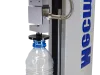
Compression Testing in Top Load Applications
A typical challenge in packaging, and bottling applications is trying to balance product integrity, where the container might be too weak and crush under load, and excessive raw material cost, where the container is too strong.
1147
Event
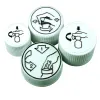
Child Resistant Closure Testing
Medical, Pharmaceutical and Chemical Packaging takes product safety seriously.
1148

Event
Top-load testing: Ensuring packaging integrity from production to transport
Top-load testing is the method used to simulate and measure the force exerted on packaging containers during production, filling, capping, storage, and transport.
1149

Event
Child Resistant Closure Torque Testing
Medical, Pharmaceutical and Chemical Packaging takes product safety seriously.
1150
[Page extract]
ASTM D3950
This specification covers nonmetallic strapping and joining methods for closing, reinforcing, and bundling materials for shipment, unitizing, palletizing, and bracing for car and truck loading.