Search results
1051

Case study
Closure torque validation
Requirement
The customer had a number of Tornado closure torque testers, and wished to carry out regular validation checks without the need to return the units to either Mecmesin or an approved laboratory.
1052
Case study
Filter test station
Requirement
The following tests were required in a simple-to-use system for a series of tests on automotive filters:
1053
Bundle
Top-load PET bottle CSD non-vented
OmniTest 2.5
BD
Top-load testing (also known as 'column-crush' and 'axial force resistance') is performed mainly on blow moulded, thermoformed or injection moulded plastic containers such as PET (Polyethylene terephthalate) bottles.
1054
[Page extract]
Built for batch testing and automation
Batch testing in VectorPro uses a pre-configured test to create a semi-automatic or fully automatic testing system on sets of products and batches of the products.
1055
[Page extract]
BS EN 13411-3
This European Standard deals with the requirements for ferrules for the ferrule-securing of eyes and endless loops - it applies to slings and assemblies using steel wire ropes for general lifting applications up to and including 60mm diameter conforming
1056
Case study
Train door closing pinch force tester
Requirement
South West Trains required a system to measure the closing force (pinch) of their external flush fitting train doors.
1057

Event
Tensile Testing: Basics, Tips, & Trends
Have you ever wondered if the seatbelt in your vehicle is strong enough to restrain you in a collision? How about the average person pulling the cork out of a wine bottle?
1058
Case study
Cable duct strength testing
Customised engineering example
Our customer manufactures tubes and ducts for routing of cables and optical fibres. Installation of these uses blowing, pushing and pulling techniques.
1059
[Page extract]
Introduction to penetration and puncture resistance testing
Penetration and puncture resistance testing are essential for evaluating how well a material can withstand force from sharp, pointed, or blunt objects.
1060
Case study
Glass syringe Luer lock attachment pull-off
Customised engineering example
Polycarbonate Luer Lock adapters are push-fitted to glass syringe nozzles with a friction fit. Quality assurance demands that they cannot come free under normal use.
1061
[Page extract]
Simplify data analysis in force, materials and torque testing
Test calculations are the values derived from raw measurement data, such as peak force, torque angle, or modulus of elasticity. With advanced software, these are now calculated instantly and with high precision, replacing error-prone manual methods.
1062
[Page extract]
Understanding test types
Material testing uses a variety of methods to assess different mechanical properties. Selecting the right test depends on the intended application and relevant standards.
Examples include:
1063
[Page extract]
Understanding flexural strength
Flexural strength (modulus of rupture) refers to a material’s resistance to deformation under load.
1064
[Page extract]
ISO 252
ISO 252 specifies two test methods, A and B, for determining the adhesion strength between constitutive elements of a conveyor belt, i.e. between plies and between covers and carcass.
1065
[Page extract]
ASTM D1710
Among tests for electrical and dimensional (temperature) stability, includes methods for tensile characteristics.
1066
[Page extract]
Troubleshooting and best practices
Secure adhesive firmly in the fixture to prevent slippage
Clean substrates between tests to remove residue
Maintain consistent loop dimensions using fixture guides
Control temperature and humidity to match the test s
1067
[Page extract]
ASTM D6862-11
This test method is useful for acceptance and quality control testing. Adherends, application procedure, and sample conditioning shall be as agreed upon by the manufacturer and the user of the adherends and the adhesive.
1068
[Page extract]
Standards for the 90-degree peel test
The 90-degree peel test is defined by several recognised international standards, which provide consistent methodology and reporting requirements:
1069
[Page extract]
BS EN 60794-1-21:2015+A1
This part of IEC 60794 applies to optical fibre cables for use with telecommunication equipment and devices employing similar techniques, and to cables having a combination of both optical fibres and electrical conductors.
1070
[Page extract]
ASTM D412-16
ASTM D412 is a test standard for testing the tensile stress-strain properties of thermoset rubbers and thermoplastic elastomers. The standard is divided into two test methods.
1071
[Page extract]
ISO 13939
Describes a method of comparing the performance test results of foil journal bearings, which are lubricated by air (gas) and supported by hydrodynamic force generated by the rotation of the rotating shaft.
1072

Event
Needle Sharpness & Puncture Resistance Testing
Hypodermic needles are tested to determine how their design influences the ease of insertion into the skin, patient pain and skin trauma.
1073
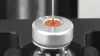
Event
Needle Sharpness & Puncture Resistance Testing
Hypodermic needles are tested to determine how their design influences the ease of insertion into the skin in order to prevent patient pain and skin trauma.
1074
[Page extract]
Standards for tear resistance testing
While the core principle of wing tear testing remains the same, each standard specifies unique specimen shapes, notch sizes and test speeds. Adhering to these requirements ensures results are valid and comparable.
1075
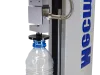
Event
Compression Testing in Top Load Applications
A typical challenge in packaging, and bottling applications is trying to balance product integrity, where the container might be too weak and crush under load, and excessive raw material cost, where the container is too strong.