Search results
501

Event
Materials Testing: Theory and Practice Pt. 1 & 2
Materials testing is often the last step in the manufacturing process. Yet, quality is the result of both the process and the material. If the material that goes into the product is inadequate or defective, then the product may be deficient or faulty.
502

Case study
Toy testing to attachment strength safety standards
Requirement
The customer supplies plush giftware to retailers such as Clintons. Their plush products are manufactured to European toy safety standard BS EN 71-1:1998 (Safety of toys - Part 1: Mechanical and physical properties).
504

[Page extract]
Industry
Mecmesin is an expert in the design and manufacture of force, materials and torque testing equipment, with over 40 years’ dedicated experience in the field.
505
[Page extract]
ASTM D3359
These test methods cover procedures for assessing the adhesion of coating films to metallic substrates by applying and removing pressure-sensitive tape over cuts made in the film.
506
[Page extract]
How is double lap shear testing performed?
Specimen preparation
Specimens are prepared according to standardised dimensions.
507
[Page extract]
How to perform a box crush test
A successful box crush test requires consistent specimen preparation, suitable equipment and precise execution.
508
[Page extract]
Manual controls and switches
Switches come in many different configurations... toggle, rotary, mercury, push-button, reversing, relay and circuit breaker.
509
[Page extract]
How is the 135° peel test performed?
Specimen preparation
Test specimens are usually strips cut from the sealed edge of a tray or container.
510
[Page extract]
How the single rip trouser tear method works
The method takes its name from the specimen shape, where a single cut partway into the sample creates two ‘legs’, similar to the shape of a pair of trousers.
511
[Page extract]
What is the trapezoidal tear test?
The trapezoidal tear test is a mechanical method used to determine the tear strength of flexible sheet materials.
513
Event
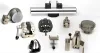
Essentials of grip & fixture selection in force & torque testing
For a test to work, the test system needs to properly interface with its specimen.
514
[Page extract]
BS EN 17665
The Directive (EU) 2019/904 “on the reduction of the impact of certain plastic products on the environment” introduces the requirement that plastic caps and lids of single use plastic beverage containers up to 3 l capacity shall remain attached to the c
515

Event
Materials Testing: Theory and Practice Pt. 2
Materials testing is often the last step in the manufacturing process. Yet, quality is the result of both the process and the material. If the material that goes into the product is inadequate or defective, then the product may be deficient or faulty.
516
Event
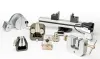
Webinar: Essentials of Grip & Fixture Selection in Force & Torque Testing
For a test to work, the test system needs to properly interface with its specimen.
517
Event
Materials Testing: Theory and Practice Pt. 2
Materials testing is often the last step in the manufacturing process. Yet, quality is the result of both the process and the material. If the material that goes into the product is inadequate or defective, then the product may be deficient or faulty.
518
[Page extract]
ISO 5628
Specifies three test methods for determining the bending stiffness of paper and paperboard. The test methods differ in the type of loading mode, thus giving rise to the two-point, three-point and four-point bending test methods.
519
[Page extract]
ASTM B571
This practice covers simple, qualitative tests for evaluating the adhesion of metallic coatings on various substances.
520
[Page extract]
ASTM F2255-05
This test method is intended to provide a means for comparison of the adhesive strengths of tissue adhesives intended for use as surgical adhesives or sealants, or both, on soft tissue.
521

Event
Medical Devices: Torque testing of Child Resistant Closures (CRC) with 21 CFR Part 11 compliance
Torque testing of Child Resistant Closures (CRC) with 21 CFR Part 11 compliance
522

Event
Medical Device Testing: Torque testing of Child Resistant Closures (CRC) with 21 CFR Part 11 compliance
Torque testing of Child Resistant Closures (CRC) with 21 CFR Part 11 compliance
523
[Page extract]
Tensile deformation and its significance
Tensile deformation occurs when a material is stretched by an axial load, causing it to elongate.
524
[Page extract]
Testing Procedure
Performing the needle penetration and drag test involves several steps:
525
[Page extract]
How is 180 degree peel testing performed
The test is carried out on a universal testing machine fitted with a suitable peel fixture.