Search results
1751
[Page extract]
FINAT FTM1
This test method is designed to quantify the permanence of adhesion or peelability of self-adhesive pressure sensitive) materials.
1752
[Page extract]
ASTM C158
These test methods cover the determination of the modulus of rupture in bending of glass and glass-ceramics. These test methods are applicable to annealed and prestressed glasses and glass-ceramics available in varied forms.
1753

Event
Tensile Testing: Extension, Elongation, Force & Failure
The primary objective for measuring and analyzing the the tensile force value of a product is to accurately determine one or more of these factors:
1754

Event
Understanding Adhesion Strength: 180 Degree Peel Test
Across many households and industries, consumers have developed a strong preference for and confidence in ‘Duct Tape’ for all types of uses and applications. This is mainly due to the adhesion strength.
1755
[Page extract]
ASTM D2062
The method(s) in the standard along with those in Test Methods D 2051, D 2052, D 2053, D 2054, D 2057, D 2058, D 2059, D 2060, and D 2061 are a collection of proven test methods.
1756
[Page extract]
Afera 5001
Self Adhesive Tapes - Measurement of Peel Adhesion from Stainless Steel or from its own Backing.
1757

Event
Compressive Crush Force Testing
This webinar will focus on identifying and troubleshooting variables that impact compressive force testing, setting up repeatable compression force tests and establishing consistent testing standards for your products.
1758
[Page extract]
DIN EN 61238-1
Electric connectors, Crimped connectors, Electric cables, Power cables, Electric conductors, Electric wires, Copper, Aluminium, Temperature, Classification systems, Type testing, Short-circuit current tests, Resistance measurement, Mechanical testing, T
1760
[Page extract]
BS EN ISO 10590
This International Standard specifies a method for the determination of the influence of water immersion on the adhesion/cohesion properties at maintained extension of sealants used in joints in building construction.
1761
[Page extract]
SAE AS7928
This specification covers insulated and uninsulated crimp-style copper terminal lugs and conductor splices for stranded conductors. An Amendment corresponding to this standard is available at AS7928_A1
1762
[Page extract]
ISO 6237
Specifies a method for determining the shear strength of wood-to-wood adhesive bonds, with a standard specimen loaded in tension and under specified conditions of preparation, conditioning and testing.
1763
Event
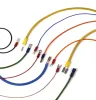
Tensile Testing for Wiring Harness Connections
The only way of really knowing the strength of a crimped terminal is to pull it. This can reveal production problems, where strand nicks, incorrect crimp height, or effects from changes in terminal supply, may not be clearly apparent.
1764
Event
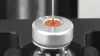
Medical Devices – Syringe & Needle Testing Fundamentals
Vial sealing is a critical step in the process of ‘fill and finish’ operations for vaccines and medications, as it defines the seal quality of the final product, ensuring sterility and preventing leakage.
1765
[Page extract]
FINAT FTM2
This test method differs from FTM 1 in that it can allow the end user to compare the repositionability of different laminates.
1767
Event
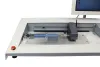
Understanding Adhesion Strength: 180 Degree Peel Test
Across many households and industries, consumers have developed a strong preference for and confidence in ‘Duct Tape’ for all types of uses and applications. This is mainly due to the adhesion strength.
1768
[Page extract]
BS EN 2591-420
Aircraft components, Air transport engineering, Electrical connections, Electric connectors, Optical fibres, Fibre optic connectors, Test methods, Strength of materials, Tensile strain, Torsional strength, Bending stress.

1770
[Page extract]
ASTM D2061
No one test determines the suitability of a zipper for a specific end use. Since the tests are inter-related more than one may be needed for a complete evaluation.
1771
[Page extract]
ASTM F3014-14
1.1 This test method describes the procedure for penetration testing sharp and blunt needles used for the placement of surgical sutures. It only describes the test procedures (Phase 1) and does not define a test medium at this time.
1772
[Page extract]
ISO 20345
ISO 20345:2011 specifies basic and additional (optional) requirements for safety footwear used for general purpose. It includes, for example, mechanical risks, slip resistance, thermal risks, ergonomic behaviour.
1774
[Page extract]
BS EN ISO 314-1
This test standard specifies methods for determining the bonding quality of veneer plywood, blockboard and laminboard by shear testing.