Search results
1202
[Page extract]
BS 6319-7
BS 6319-7 is a test method for determining the tensile strength of resin and polymer/cement compositions for use in construction.
1203
[Page extract]
BS EN 310
BS EN 310 specifies a method of determining the apparent modulus of elasticity in flatwise bending and bending strength of wood-based panels of nominal thickness ≥ 3mm.
1204
[Page extract]
ISO 17454
ISO 17454 specifies a method for testing the adhesion between layers of multilayer pipes using a pulling test rig.
1205
[Page extract]
BS EN 12814-7
BS EN 12814-7 is a tensile test method with waisted test specimens for testing welded joints of thermoplastics semi-finished products.
1206
[Page extract]
IEC 61730-2
The standard defines the basic safety test requirements and additional tests that are a function of the PV module end-use applications.
1207

Event
Packaging: Peel & Adhesion testing
Adhesion strength is a key factor in packaging, providing reliability and durability for a wide range of products.
Whether it's ensuring that a shipping box remains sealed during transit or that labels stay firmly attached to containers, the a
1208
[Page extract]
BS EN ISO 10619-1
BS EN ISO 10619-1 is a test method covering bending tests on rubber or plastics hoses and tubing.
1209
[Page extract]
SAE J174M
This test procedure is intended to provide a quality control method for checking torque-tension characteristics of non-prevailing torque type threaded steel fasteners 6 through 24 mm nominal diameters.
1210

Event
Tensile Testing: Extension, Elongation, Force & Failure
The primary objective for measuring and analyzing the the tensile force value of a product is to accurately determine one or more of these factors:
1211

Event
Top-load testing: Ensuring packaging integrity from production to transport
Top-load testing is the method used to simulate and measure the force exerted on packaging containers during production, filling, capping, storage, and transport.
1212
[Page extract]
BS ISO 2285
BS ISO 2285 is a test method for determining the tension set under constant elongation of vulcanised rubber or thermoplastic.
1213
[Page extract]
BS EN ISO 1806
This standard specifies a method of determining the mesh breaking force of netting for fishing.
1214
[Page extract]
ISBT PTC-00002
This ISBT (International Society of Beverage Technologists) publication outlines dimensional and physical characterization and performance test methods for PET beverage bottles for use in CSD (Carbonated Soft Drink), Hotfill, and Cold Fill applications.
1215
[Page extract]
ASTM D5083-17
ASTM D5083 is a test method for measuring the force required to break a reinforced thermoset plastic specimen and the extent to which the specimen stretches or elongates to that breaking point.
1216
Event
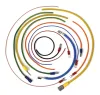
Tensile Testing for Wiring Harness Connections
The only way of really knowing the strength of a crimped terminal is to pull it. This can reveal production problems, where strand nicks, incorrect crimp height, or effects from changes in terminal supply, may not be clearly apparent.
1217
[Page extract]
ASTM D3914
ASTM D3914 is a test method used to measure the in-plane shear strength of pultruded, glass-fiber reinforced, thermosetting plastic rod in diameters ranging from 19 to 32 mm.
1218
[Page extract]
ASTM D6117-18
ASTM D6117 covers the evaluation of fastener use with “as manufactured” plastic lumber and shapes through the use of two different testing procedures:
1219

Event
Tensile Testing: Extension, Elongation, Force & Failure
The primary objective for measuring and analyzing the the tensile force value of a product is to accurately determine one or more of these factors:
1220
[Page extract]
ASTM D2718
These test methods determine the shear properties of structural panels associated with shear distortion of the planes parallel to the edge planes of the panels. Both shear strength and modulus of rigidity may be determined.
1221
[Page extract]
BS EN 843-1
EN843-1 describes methods for determining the nominal flexural strength of advanced monolithic technical ceramic materials at ambient temperature.
1222
[Page extract]
ASTM D876 - 13
ASTM D876 is a test method covering the testing of general-purpose (Grade A), low-temperature (Grade B), and high-temperature (Grade C)2 non-rigid vinyl chloride polymer tubing, or its copolymers with other materials, for use as electrical insulation.
1223
[Page extract]
ASTM D5934-02
ASTM D5934 specifies the use of controlled rate of loading mechanical instrumentation on rectangular plastic bars molded directly or cut from sheets, plates, or molded shapes via three-point loading bending techniques to obtain material properties such
1224
[Page extract]
ASTM D1876
This test method measures the peel separation strength of two flexible materials that have been bonded together.