Search results
1951
[Page extract]
TAPPI T 556
This procedure is used to measure the bending resistance of paper and paperboard in the machine and cross machine directions, by determining the bending resistance in mN of a 38mm (1.5in) wide vertically clamped sample, at 15o or 7.5o deflection.
1952
[Page extract]
BS 6319-3
BS 6319-3 is a test method for determining the modulus of elasticity in flexure and flexural strength of resin and polymer/cement compositions for use in construction.
1953
[Page extract]
BS 7882
This British Standard specifies the requirements for the calibration and classification of torque measuring devices including those used for the calibration of hand torque tools to BS EN 26789: 1994/
1954
[Page extract]
BS EN 2747
BS EN 2747 is a tensile test method for testing carbon fibre reinforced plastics.
Before conducting BS EN 2747, it is important to read the entire specification. Standards can be obtained from appropriate standard authorities.
1955
[Page extract]
ISO 9073-3
Application of a force longitudinally to a test piece of a specified length and width at a constant rate of extension. Determination of values for breaking strength and elongation from the recorded force-elongation curve.
1957
[Page extract]
ASTM D4964-96
5.1 This test method for testing loop tension and elongation of elastic fabrics is considered satisfactory for acceptance testing of commercial shipments of elastic fabrics because the test method is used in the trade for acceptance testing.
1958
[Page extract]
EN 14488-2
Part 1: Sampling fresh and hardened concrete
Part 2: Compressive strength of young sprayed concrete
Part 3: Flexural strengths (first peak, ultimate and residual) of fibre reinforced beam specimens
1959

Event
Packaging: Peel & Adhesion testing
Adhesion strength is a key factor in packaging, providing reliability and durability for a wide range of products.
Whether it's ensuring that a shipping box remains sealed during transit or that labels stay firmly attached to containers, the a
1960
[Page extract]
DIN EN 1464
This European Standard specifies a floating roller method for the determination of the peel resistance of high-strength adhesive bonds between one rigid adherend and one flexible adherend when tested under specified conditions of preparation and testing
1961

Event
Fundamentals of Texture Testing Analysis
The primary goal for using instrumentation to measure texture is to capture an objective value to something that is typically evaluated very subjectively. Texture cannot be controlled unless it measured in a consistent and repeatable manner.
1962
[Page extract]
ISO 9727-2
This part of ISO 9727 specifies a test method for:
⎯ measuring the mass of cylindrical cork stoppers ready for use or semi-worked, totally or partially made of agglomerated cork, and
1963
[Page extract]
SAE AMSSTD
This standard covers the general requirements and methods for testing sandwich core materials and for testing sandwich construction of the types used primarily in aircraft structures.
1964

Event
Cap Closure and Removal Torque Testing
The primary objective for measuring and analyzing the torque characteristics of a container cap is to accurately determine not only the quality of the part or process, but also the root cause of a wide variety of defects.
1965
[Page extract]
TAPPI T 400
This method describes procedures for obtaining a representative sample for testing.
1966
[Page extract]
ASTM D2148
ASTM D2148 is a test standard that for testing bondable silicone rubber tapes, which form a sealed structure either with the application of heat (and pressure if needed) or by the process of auto-adhesion (self-fusing).
1967
[Page extract]
TAPPI T 840
This method describes a procedure for evaluating the adhesive used in glued lap joints of corrugated containers.
1968
[Page extract]
ASTM D6746-15
ASTM D6746 is a test standard that covers methods to evaluate a characteristic of raw rubber or unvulcanized rubber compounds that is designated as green strength.
1969

Event
Wire Terminal Strength & Crimp Testing Webinar
The only way of really knowing the strength of a crimped terminal is to pull it.
1970
[Page extract]
ASTM F2256-05
This test method is intended to provide a means for comparison of the adhesive strengths of tissue adhesives intended for use as surgical adhesives or sealants, or both, on soft tissue.
1971
[Page extract]
ASTM C393
This test method covers the determination of the core shear properties of flat sandwich constructions subjected to flexure in such a manner that the applied moments produce curvature of the sandwich facing planes.
1972
[Page extract]
BS EN ISO 8295
ISO 8295 specifies a method for determining the coefficients of starting and sliding friction of plastics film and sheeting when sliding over the same or other substances. It is intended to be used for non-sticky plastic film and sheeting of up to appr
1973
[Page extract]
CETIE Guide 6
This guide gives information on good practice for bottling still wine with an aluminium screw caps on a BVS type glass finish according to EN 16293, with redraw of the cap on application.
1974
[Page extract]
ASTM D3983
This test method describes a method of measuring the shear modulus and rupture stress in shear of adhesives in bonded joints.
1975
Event
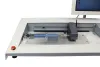
Understanding Adhesion Strength: 180 Degree Peel Test
Across many households and industries, consumers have developed a strong preference for and confidence in ‘Duct Tape’ for all types of uses and applications. This is mainly due to the adhesion strength.