Search results
1001
[Page extract]
BS EN 13942
This International Standard specifies requirements and provides recommendations for the design, manufacturing, testing and documentation of ball, check, gate and plug valves for application in pipeline systems meeting the requirements of ISO 13623 for t
1002
[Page extract]
PSTC 101
These methods cover the measurement of the peel adhesion of pressure sensitive tapes.
1003
[Page extract]
ASTM D6109-19
ASTM D 6109 determines the flexural properties for any solid or hollow manufactured plastic lumber product of square, rectangular, round, or other geometric cross section that shows viscoelastic behavior.
1004

Event
Pull Force and Break Strength Testing
Whether it is medical tubing, plastic straws, copper wire or zip ties, pull force and break strength testing is critical not only to production quality but also to consumer safety.
1005
[Page extract]
ASTM D6862-11
This test method is useful for acceptance and quality control testing. Adherends, application procedure, and sample conditioning shall be as agreed upon by the manufacturer and the user of the adherends and the adhesive.
1006
[Page extract]
ISO 8510-1
Particularly suitable for use with less flexible adherends for which a 180 ° peel test is not suitable because the adherends crack, break or delaminate. A bonded assembly of two adherends is prepared using the adhesive under test.
1007
Event
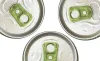
Wine & Spirits: Pull Tab & Twist Cap Testing
Canned wine and seltzer drinks have a clear upside that makes their popularity soar: Convenience. As well as being lighter to carry, less potentially fragile, eliminating the corkscrew, and even a glass makes it ideal for social gatherings.
1008
[Page extract]
ASTM D885/D885M-10a
These [comprehensive] test methods cover the testing of industrial filament yarns made wholly of manufactured organic-base fibers, cords twisted from such yarns, fabrics woven from such cords, and products that are made specifically for use in the manuf
1009
Event
Tensile Testing for Wiring Harness Connections
The only way of really knowing the strength of a crimped terminal is to pull it. This can reveal production problems, where strand nicks, incorrect crimp height, or effects from changes in terminal supply, may not be clearly apparent.
1010
Event
Tensile Testing for Wiring Harness Connections
The only way of really knowing the strength of a crimped terminal is to pull it. This can reveal production problems, where strand nicks, incorrect crimp height, or effects from changes in terminal supply, may not be clearly apparent.
1011

Event
Fundamentals of Torque Testing
If you have ever struggled to open your favorite bottle of water or jam or required help loosening the lug nuts on your car’s wheels, it is likely due to a case of over-torque.
1012

Event
Fundamentals of Torque Testing
If you have ever struggled to open your favorite bottle of water or jam or required help loosening the lug nuts on your car’s wheels, it is likely due to a case of over-torque.
1013
Event
Fundamentals of Torque Testing
If you have ever struggled to open your favorite bottle of water or jam or required help loosening the lug nuts on your car’s wheels, it is likely due to a case of over-torque.
1014

Software
VectorPro Lite force motorised stand
VectorPro® Lite software
Available as an optional extra to Mecmesin’s motorised force testers, VectorPro Lite is an advanced data acquisition and plotting software package. Call-up pre-stored test routines for tensile and compression testing, present test…
1015
[Page extract]
Frequently asked questions
How do I select the right fixture for my material?
Fixture selection depends on specimen dimensions, material type, and the relevant standard.
1016
[Page extract]
Anchorage strength testing
Definition and purpose
Anchorage strength testing evaluates how securely a component is fixed into place, whether crimped, inserted, bonde
1017
[Page extract]
What is yield point?
The yield point is the point on a stress-strain curve where a material begins to deform plastically. Before this point, deformation is elastic and reversible. Beyond it, the material undergoes permanent change.
1018
[Page extract]
Applications in industry
Construction materials
Cleavage strength testing is used to verify the integrity of structural materials such as laminated timber beams, bonded façade panels, and composite structures.
1019
[Page extract]
Overview of common testing standards
Different materials and applications are covered by specific puncture resistance standards, each with its own apparatus and procedure.
1020
[Page extract]
Step-by-step needle penetration testing process
Sample preparation
Specimens are cut to the required dimensions and conditioned to the specified environmental parameters such as temperature and humidity. Thickness and surface finish are controlled for consistency.
1021
[Page extract]
What is wing tear testing (Winkelmann/Graves method)?
Wing tear testing is a tensile-based method for flexible materials, in which a wing-shaped specimen is subjected to a controlled force until it tears.
1022
[Page extract]
What is four-point bend testing?
Four-point bend testing determines a material’s flexural strength and stiffness by applying force at two points between two supports.
1023
[Page extract]
Why is texture testing important?
Texture testing ensures consistent product performance, supports process control, and validates compliance with industry standards. Even small changes in raw materials, processing conditions, or environmental factors can alter texture.
1024
[Page extract]
Shear testing equipment and procedures
Accurate shear testing requires precise control of movement, force measurement, and fixture selection.
Mecmesin offers:
1025
[Page extract]
ISO 34-2 standards explained
ISO 34-2 specifies the Delft tear test procedure for vulcanised or thermoplastic rubber, ensuring testing is carried out under consisten