Search results
1701
[Page extract]
BS EN 12562
Synthetic fibres, Polyamide fibres, Aramide fibres, Textile products, Textile testing, Yarn, Filament yarns, Filaments, Filament (textile fibre), Yarn testing, Yarn linear density determination, Elongation at fracture, Elongation, Force measurement, Mec
1702
[Page extract]
ISO 7623
ISO 7623 specifies a method for determining the bond strength of metal cords to their surrounding coating, either in the initial state or after thermal treatment.
1703

Event
Wine & Spirits: Pull Tab & Twist Cap Testing
Canned wine and seltzer drinks have a clear upside that makes their popularity soar: Convenience. As well as being lighter to carry, less potentially fragile, eliminating the corkscrew, and even a glass makes it ideal for social gatherings.
1704
Event
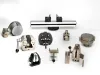
Webinar: Master Grips & Fixtures for Consistent Testing
When physically testing a material or component, the ability to apply load to a test specimen is important—but having the ability to apply that load correctly is just as crucial.
1705
[Page extract]
BS EN ISO 10618
Carbon fibres, Mechanical properties of materials, Tensile strength, Tensile testing, Plastics, Impregnated materials, Yarn, Modulus of elasticity, Strain, Tensile strain, Loading, Reinforcing materials, Composite materials, Test equipment, Test specime
1706
[Page extract]
ASTM D1566
ASTM D1566 is a source of reference for definitions of technical terms used in the rubber industry
Standards can be obtained from appropriate standard authorities.
1707
[Page extract]
ISO 4674-1
Describes two methods for determining the forces necessary to initiate and propagate tearing of a coated fabric using the constant rate of tear method. The methods described are:
method A: tongue tear
method B: trouser tear
1708
[Page extract]
BS EN 1394
BS EN 1394 is a tensile test method to determine the initial circumferential tensile strength of plastic pipes.
1709
[Page extract]
ASTM D3578
Scope... 1.1 This specification describes certain requirements for natural rubber gloves used in conducting medical examinations and diagnostic and therapeutic procedures. It also covers natural rubber gloves used in handling contaminated medical
1710
[Page extract]
ISO 7263
Specifies two methods for the determination of the flat crush resistance of a corrugating medium after laboratory fluting.
1711
[Page extract]
BS EN ISO 1856
BS EN ISO 1856 is a test method that specifies three methods for determining the compression set of flexible cellular materials and applies only to latex and polyurethane foams of thickness greater than 2 mm.
1712
[Page extract]
BS 373
Wood, Mechanical testing, Strength of materials, Test specimens, Specimen preparation, Moisture measurement, Density measurement, Physical property measurement, Static loading, Impact testing, Bend testing, Compression testing, Shear testing, Cleavage,
1713
[Page extract]
ASTM D5321-12
This test method covers a procedure for determining the shear resistance of a geosynthetic against soil, or a geosynthetic against another geosynthetic, under a constant rate of deformation.
1714
[Page extract]
BS ISO 3597-2
ISO 3597-2 specifies a method for determining the flexural strength of composite rods of circular cross-section made of roving-reinforced resin.
1715
[Page extract]
TAPPI T 402
Standard conditioning and testing atmospheres for paper, board, pulp handsheets, and related products, Test Method TAPPI/ANSI T 402 sp-13
1716
[Page extract]
TAPPI T 810
This method describes a procedure for measuring the bursting strength of single wall and double wall corrugated board within the range of 690 kPa (100psi) to 4825 kPa (700 psi) employing an instrument which uses a disk shaped, molded diaphragm.
1717
[Page extract]
ASTM D5587-08
This test method covers the measurement of the tearing strength of textile fabrics by the trapezoid procedure using a recording constant-rate-of-extension-type (CRE) tensile testing machine.
1718
[Page extract]
BS EN ISO 10074
Aluminium, Aluminium alloys, Coated materials, Anodizing, Anodic coating, Coatings, Thickness, Density, Surface defects, Classification systems, Oxides, Inspection, Grades (quality), Wear resistance, Hardness, Corrosion resistance, Wear tests, Specimen
1719
[Page extract]
ASTM F543-13
This specification provides requirements for materials, finish and marking, care and handling, and the acceptable dimensions and tolerances for metallic bone screws that are implanted into bone.
1720
[Page extract]
ASTM C972
Tape sealants are tacky, deformable solids used under compression between two or more surfaces of similar or dissimilar materials in a variety of sealing applications.
1721
[Page extract]
SAE USCAR-21-4
This specification defines test methods and requirements for validation of solderless crimped connections.
1722
[Page extract]
ASTM F628-12e3
This specification covers coextruded acrylonitrile-butadiene-styrene (ABS) plastic drain, waste, and vent pipes made to Schedule 40 iron pipe sizes (IPS) with concentric inner and outer solid ABS layers and a closed-cell cellular ABS core.
1723
[Page extract]
ASTM D3165
This test method is useful in that the joint configuration closely simulates the actual joint configuration of many bonded assemblies.
1724
[Page extract]
EN 22872
EN 22872 specifies two methods for testing complete, filled transport packages for compression resistance.
1725
[Page extract]
ASTM D5083-17
ASTM D5083 is a test method for measuring the force required to break a reinforced thermoset plastic specimen and the extent to which the specimen stretches or elongates to that breaking point.