Search results
1552
[Page extract]
ISO 9073-3
Application of a force longitudinally to a test piece of a specified length and width at a constant rate of extension. Determination of values for breaking strength and elongation from the recorded force-elongation curve.
1553
[Page extract]
ASTM D6117-18
ASTM D6117 covers the evaluation of fastener use with “as manufactured” plastic lumber and shapes through the use of two different testing procedures:
1554
[Page extract]
BS 6319-6
BS 6319-6 is a test method for determining the modulus of elasticity in compression of resin and polymer/cement compositions for use in construction.
1555
[Page extract]
BS EN 12445
This standard specifies the test methods to be applied to a power operated door to demonstrate compliance with the requirements specidied in EN 12453: 2000 in particular it specifies the method of measuring the forces developed by a power operated door.
1556

Event
Packaging: Establishing repeatability and consistency
Ensuring the quality and durability of packaging is crucial for maintaining product integrity from production to delivery.
1557
[Page extract]
ASTM D876 - 13
ASTM D876 is a test method covering the testing of general-purpose (Grade A), low-temperature (Grade B), and high-temperature (Grade C)2 non-rigid vinyl chloride polymer tubing, or its copolymers with other materials, for use as electrical insulation.
1558
[Page extract]
BS EN 12814-6
BS EN 12814-6 is a low temperature tensile test method for testing welded joints of thermoplastics semi-finished products.
1559
[Page extract]
ASTM D5934-02
ASTM D5934 specifies the use of controlled rate of loading mechanical instrumentation on rectangular plastic bars molded directly or cut from sheets, plates, or molded shapes via three-point loading bending techniques to obtain material properties such
1560
[Page extract]
BS EN ISO 10066
BS EN ISO 10066 is a test method for determining creep in tension of flexible cellular polymeric materials.
1561
[Page extract]
SAE J174
This test procedure is intended to provide a quality control method for checking torque-tension characteristics of non-prevailing torque type threaded steel fasteners 1/4 through 1 in nomial diameters.
1562
[Page extract]
ISBT PTC-00019
This document provides a collection of test methods for the qualification of plastic flat-top closures applied on PET bottles that are used in the beverage industry.
1563
[Page extract]
BS EN 843-1
EN843-1 describes methods for determining the nominal flexural strength of advanced monolithic technical ceramic materials at ambient temperature.
1564
[Page extract]
BS 4863
Gives safety requirements for playpens for use by children up to 15kg in weight. It covers both rigid sided and mesh sided playpens.
1565
Event
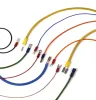
Tensile Testing for Wiring Harness Connections
The only way of really knowing the strength of a crimped terminal is to pull it. This can reveal production problems, where strand nicks, incorrect crimp height, or effects from changes in terminal supply, may not be clearly apparent.
1566
[Page extract]
ISO 11747
ISO 11747 specifies a method for the determination of resistance to extrusion of milled rice kernels, parboiled or not parboiled, after cooking under specified conditions.
1567
[Page extract]
ASTM D7030-04
This test method covers determining the resistance of an empty paper corrugated shipping container to a vertically applied constant compression load for a specified time.
1568
[Page extract]
ASTM D1621
ASTM D1621 is used to measure the compressive properties of rigid cellular materials, particularly expanded plastics. Calculations include compressive strength, compressive strain, compressive stress and compressive modulus.
1569
[Page extract]
Puncture/penetration jigs
Puncture tests are performed to determine the resistance of a material to a sharp or blunt object passing right through it. As such, they normally require the measurement of a peak load.
1570
[Page extract]
ASTM C972
Tape sealants are tacky, deformable solids used under compression between two or more surfaces of similar or dissimilar materials in a variety of sealing applications.
1571

Event
Tensile Testing for Wiring Harness Connections
The only way of really knowing the strength of a crimped terminal is to pull it. This can reveal production problems, where strand nicks, incorrect crimp height, or effects from changes in terminal supply, may not be clearly apparent.
1572
[Page extract]
ASTM D412-16
ASTM D412 is a test standard for testing the tensile stress-strain properties of thermoset rubbers and thermoplastic elastomers. The standard is divided into two test methods.
1573
[Page extract]
ISO 34-1
ISO 34-1 measures tear strength test methods for rubber test samples. The test results in measurement of a materials resistance to tearing. Tear strength can also be used to monitor material anisotropy of a material.
1574
[Page extract]
ASTM D3166
This test method covers the measurement of fatigue strength in shear by tension loading of adhesives on a standard specimen and under specified conditions of preparation, loading, and testing.
1575

Event
Fundamentals of Compression Testing
Push or compressive testing helps determine the limits of most products that require constant pushing or compression.