Search results
2051
[Page extract]
ASTM D3810
This test method covers the determination of or the recommendation for minimum application torque that results in a fully degraded removal torque that is at a level greater than the maximum expected reverse-ratchet torque for a Type IA child-resistant c
2052
[Page extract]
ISO 1798
ISO 1798 specifies a method for determining the strength and deformation properties of flexible cellular materials when a test piece is extended at a constant rate until it breaks.
This test standard is equivalent to BS EN ISO 1798:2008
2053
[Page extract]
ISO 36
ISO 36 determines the strength required to separate two plies of fabric bonded together with rubber, or a rubber and a fabric ply bonded together. This test is referred to as a “T-peel” test, because as the two adherends are pulled apart, they form the
2054
[Page extract]
ASTM D6264 /D6264M-17
In ASTM D6264 a quasi-static indentation (QSI) test method is used to obtain quantitative measurements of the damage resistance of a continuous-fibre-reinforced composite material to a concentrated indentation force
2055
[Page extract]
ASTM D3039 / D3039M
ASTM D3039 determines the in-plane tensile properties of polymer matrix composite materials reinforced by high-modulus fibers. A number of calculations can be made including ultimate tensile strength, ultimate tensile strain, tensile chord modulus of
2056
[Page extract]
BS EN 12311-2
BS EN 12311-2 is a test method for determining the tensile properties of flexible sheets used for waterproofing roofs.
2057

Event
Packaging: Peel & Adhesion testing
Adhesion strength is a key factor in packaging, providing reliability and durability for a wide range of products.
Whether it's ensuring that a shipping box remains sealed during transit or that labels stay firmly attached to containers, the a
2058
[Page extract]
BS EN 1393
BS EN 1393 specifies a test method for testing the longitudinal tensile properties of glass-reinforced thermosetting plastics (GRP) pipes.
2059

Event
Fundamentals of Texture Testing Analysis
The primary goal for using instrumentation to measure texture is to capture an objective value to something that is typically evaluated very subjectively. Texture cannot be controlled unless it measured in a consistent and repeatable manner.
2060
[Page extract]
BS EN 671-2
Fire hydrants, Fire hoses, Firefighting equipment, Flexible pipes, Fire safety in buildings, Design, Performance, Performance testing, Conformity, Approval testing, Corrosion tests, Ageing tests, Flow measurement, Impact testing, Pressure testing, Hydra
2061
[Page extract]
ASTM D906-98
The way adhesives are used in plywood makes shear strength an important performance criteria. Shear strength measured by this test is suitable for use in adhesive development, manufacturing quality control, and in materials performance specifications.
2062
[Page extract]
ASTM D4475-02
ASTM D4475 is a test method used for determining the horizontal shear strength of fiber reinforced plastic rods.
2063
[Page extract]
ASTM D413-98
ASTM D413 is a test method used to determine the force per unit width required to separate a rubber layer from a flexible substrate such as fabric, wire or sheet metal.
2064
[Page extract]
BS EN ISO 9000
ISO 9000 gives an overview of the fundamentals and concepts around quality management.
2065
[Page extract]
ASTM D229
ASTM D229 is a test method, which provides useful engineering information for evaluating the mechanical behaviour of rigid electrical insulation at elevated temperature.
2066
[Page extract]
ISO 8364
ISO 8364:2007 specifies requirements and test methods for the binding mounting area and free space area, ski bindings and retention devices of alpine skis, in order to optimize the compatibility of the functional unit "ski binding - retention device - b
2067
[Page extract]
BS EN 1607
This European Standard specifies the equipment and procedures for determining the tensile strength of a product perpendicular to its faces. It is applicable to thermal insulating products.
2068
[Page extract]
ASTM D2105
ASTM D2105 determines the comparative longitudinal tensile properties of fiberglass pipe when tested under defined conditions of pretreatment, temperature, and testing machine speed.
2069
Producto
Probadores de impacto de dardos que caen
Gama MEC-FD
MEC-FD1
La gama Mecmesin MEC-FD Falling Dart Impact Tester está diseñada para medir la resistencia al impacto o la tenacidad de las películas de plástico de conformidad con los métodos A y B de dardos de caída libre ASTM D1709 e ISO 77
2070
Producto
Calibrador de llave dinamométrica
TWC
875-001
El Calibrador de Llave de Torsión TWC es una solución simple y rentable para verificar las configuraciones en llaves estándar de 'haz', 'clic' y 'ruptura'. Operado manualmente y midiendo el torque en sentido horario y antihorario…
2071
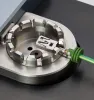
Event
Wire Terminal Strength & Crimp Testing Webinar
The only way of really knowing the strength of a crimped terminal is to pull it.
2072
[Page extract]
ISO 8510-1
Particularly suitable for use with less flexible adherends for which a 180 ° peel test is not suitable because the adherends crack, break or delaminate. A bonded assembly of two adherends is prepared using the adhesive under test.
2074
[Page extract]
SAE J1525
This SAE Recommended Practice describes a lap shear test method for use in measuring the bonding characteristics of automotive-type adhesives for joining fiber reinforced plastics to themselves and to metals.
2075
[Page extract]
ISO 7622-1
ISO 7622-1 specifies a method for the determination of the elongation of steel cords constituting the carcass of conveyor belts, when subjected to a force corresponding to 10 % and 60 % of the specified tensile strength.