Search results
1176
[Page extract]
BS 6319-7
BS 6319-7 is a test method for determining the tensile strength of resin and polymer/cement compositions for use in construction.
1177
[Page extract]
BS EN 310
BS EN 310 specifies a method of determining the apparent modulus of elasticity in flatwise bending and bending strength of wood-based panels of nominal thickness ≥ 3mm.
1178
[Page extract]
ASTM D1683
This test method measures the sewn seam strength in woven fabrics by applying a force perpendicular to the sewn seams.
1179

Event
Top-load testing: Ensuring packaging integrity from production to transport
Top-load testing is the method used to simulate and measure the force exerted on packaging containers during production, filling, capping, storage, and transport.
1180
[Page extract]
ASTM D926-17
ASTM D926 is a test method that covers the determination of plasticity and recovery of unvulcanized rubber by means of the parallel plate plastometer. Uncompounded, compounded, and reclaim rubber may be tested.
1181
[Page extract]
BS EN 12814-7
BS EN 12814-7 is a tensile test method with waisted test specimens for testing welded joints of thermoplastics semi-finished products.
1182
[Page extract]
ASTM D3471
This test method covers the determination of the top-load required to engage lugs on Type IA child-resistant closures.
1183
[Page extract]
BS EN ISO 10619-1
BS EN ISO 10619-1 is a test method covering bending tests on rubber or plastics hoses and tubing.
1184
[Page extract]
SAE J174M
This test procedure is intended to provide a quality control method for checking torque-tension characteristics of non-prevailing torque type threaded steel fasteners 6 through 24 mm nominal diameters.
1185
[Page extract]
ASTM D1975
ASTM D1975 provides procedures for an indication of the environmental stress crack resistance of plastic injection moulded open head pails, covers, and components as a summation of the effects of container design, resin and manufacturing.
1186
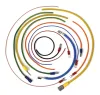
Event
Tensile Testing for Wiring Harness Connections
The only way of really knowing the strength of a crimped terminal is to pull it. This can reveal production problems, where strand nicks, incorrect crimp height, or effects from changes in terminal supply, may not be clearly apparent.
1187
[Page extract]
ASTM D4475-02
ASTM D4475 is a test method used for determining the horizontal shear strength of fiber reinforced plastic rods.
1188
[Page extract]
BS ISO 2285
BS ISO 2285 is a test method for determining the tension set under constant elongation of vulcanised rubber or thermoplastic.
1189
[Page extract]
BS EN ISO 1806
This standard specifies a method of determining the mesh breaking force of netting for fishing.
1190

Event
Fundamentals of Adhesion (Peel) Testing
There is a reason people reach for Duct Tape as a fix for almost everything – Adhesion Strength. From busted pipes to ripped furniture, the preference for a solution that “does not easily peel off” is the guiding principle for manufactures.
1191
[Page extract]
ASTM D816-06
These test methods cover tests to measure the properties of adhesives, commonly called rubber cements, that may be applied in plastic or fluid form and that are manufactured from natural rubber, reclaimed rubber, synthetic elastomers, or combinations of
1192
[Page extract]
ISO 17454
ISO 17454 specifies a method for testing the adhesion between layers of multilayer pipes using a pulling test rig.
1193
[Page extract]
BS EN 1799
Applicable to both vertical and horizontal surfaces. To be read in conjunction with BS EN 1504-1:2005
Concretes, Structures, Adhesives, Surfaces, Repair, Performance testing, Physical testing, Flow, Specimen preparation, Test equipment
1194
[Page extract]
ASTM D3914
ASTM D3914 is a test method used to measure the in-plane shear strength of pultruded, glass-fiber reinforced, thermosetting plastic rod in diameters ranging from 19 to 32 mm.
1195
[Page extract]
IEC 61730-2
The standard defines the basic safety test requirements and additional tests that are a function of the PV module end-use applications.
1196

Event
Tensile Testing: Extension, Elongation, Force & Failure
The primary objective for measuring and analyzing the the tensile force value of a product is to accurately determine one or more of these factors:
1198
[Page extract]
ASTM D3518 / D3518M
ASTM D3518 is a test method, which measure the shear stress and shear strain properties of polymer matrix composite materials composed of +45 plies and -45° plies.
1199
[Page extract]
ISO 7263
Specifies two methods for the determination of the flat crush resistance of a corrugating medium after laboratory fluting.
1200
[Page extract]
ASTM D2918
This test method provides data for assessing the durabilities of adhesive joints by means of T-peel type specimens stressed in contact with air, air in equilibrium with certain solutions, water, aqueous solutions, or other environments at various temper