Search results
1626
[Page extract]
ASTM F1304-18
ASTM F1304 is a test method used to determine the deflection of relatively rigid resilient floor tile such as vinyl composition tile and resilient flooring with a rigid polymeric core.
1627
[Page extract]
ASTM F2256-05
This test method is intended to provide a means for comparison of the adhesive strengths of tissue adhesives intended for use as surgical adhesives or sealants, or both, on soft tissue.
1628
[Page extract]
ASTM D6068-10
This test method covers the determination of the J-integral versus crack growth resistance (J-R) curves for polymeric materials.
1629
[Page extract]
BS EN ISO 4624
Describes methods for determining the adhesion by carrying out a pull-off test on a single coating or a multi-coat system of paint, varnish or related product.
1630
[Page extract]
BS 5G 178-1
Provides updated tests and test requirements for crimped joints with copper, copper alloy, aluminium and aluminium alloy conductors.
1631
[Page extract]
ISO 6237
Specifies a method for determining the shear strength of wood-to-wood adhesive bonds, with a standard specimen loaded in tension and under specified conditions of preparation, conditioning and testing.
1632
[Page extract]
ISO 5628
Specifies three test methods for determining the bending stiffness of paper and paperboard. The test methods differ in the type of loading mode, thus giving rise to the two-point, three-point and four-point bending test methods.
1633
[Page extract]
ASTM C1424
This test method covers the determination of compressive strength including stress-strain behavior, under monotonic uniaxial loading of advanced ceramics at ambient temperature. This test method is restricted to specific test specimen geometries.
1634
[Page extract]
TAPPI T 839
This method describes procedures for determining the edgewise compressive strenght, with flutes vertical, loading perpendicular to the axis of the flutes, of a short column of single, double, or triple-wall corrugated fiberboard.
1635
Event
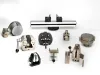
Webinar: Master Grips & Fixtures for Consistent Testing
When physically testing a material or component, the ability to apply load to a test specimen is important—but having the ability to apply that load correctly is just as crucial.
1636
[Page extract]
ASTM C1674
This test method covers the determination of the flexural strength (modulus of rupture in bending) at ambient conditions of advanced ceramic structures with 2-dimensional honeycomb channel architectures.
1637
[Page extract]
BS EN 12445
This standard specifies the test methods to be applied to a power operated door to demonstrate compliance with the requirements specidied in EN 12453: 2000 in particular it specifies the method of measuring the forces developed by a power operated door.
1638
Event
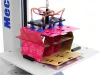
Introduction to Consumer Packaging Testing
Damaged packaging can not only cost money but also impact brand perception. Consumers are less likely to purchase a product with damaged packaging, or if their product arrives damaged from poor packaging during the shipping and transport process.
1639

Event
Fundamentals of Texture Testing Analysis
The primary goal for using instrumentation to measure texture is to capture an objective value to something that is typically evaluated very subjectively. Texture cannot be controlled unless it measured in a consistent and repeatable manner.
1640
[Page extract]
BS EN ISO 205
Adhesives. Wood adhesives for non-structural applications. Determination of tensile shear strength of lap joints.
1641
[Page extract]
IEC 60598
IEC 60598-1 specifies general requirements for luminaires, incorporating electric light sources for operation from supply voltages up to 1 000 V.
1642

Event
Wine & Spirits Capping: Cork Pull & Twist Caps
Wine packaging has a great influence on the quality of the product delivered to the customer.
1643
[Page extract]
PSTC 8
Unwind adhesion is a quantitative measure of the degree of ease or difficulty in unwinding a roll of tape.
The test specimen shall be any 10 m (10 yard) or more roll of pressure sensitive tape - preferably 24 mm (1”) wide.
1645
[Page extract]
BS EN ISO 12230
This European Standard specifies a method for the determination of the tensile properties of materials used as surfaces for sports areas.
1646
Test Frame
MultiTest test frame (twin column)
MultiTest test frame
A motorised test frame driven by twin ballscrews featuring dual-columns and designed to apply tension and compression from 2 N right up to a capacity of 50 kN (1100 lbf).Its versatile construction makes it perfectly suited for testing…
1647

Event
Fundamentals of Food Texture Testing and Analysis
Texture cannot be controlled unless it measured in a consistent and repeatable manner.
1648
[Page extract]
ASTM D4255 / D4255M-15a
ASTM D4255 is a test method for testing the in-plane shear properties of high-modulus fiber-reinforced composite materials. The method is divided into two procedures. Procedure A tests laminates clamped between two pairs of loading rails.
1649
[Page extract]
ASTM E1820-18ae1
The ASTM E1820 test method covers procedures and guidelines for the determination of fracture toughness of metallic materials using the following parameters: K, J, and CTOD (δ). Toughness can be measured in the R-curve format or as a point value.
1650
[Page extract]
ASTM D5766 / D5766-M
ASTM D5766 is a test method to determine the open-hole tensile strength of multidirectional polymer matrix composite laminates reinforced by high-modulus fibres.