Search results
1276
[Page extract]
ASTM C674
These test methods cover determination of the modulus of rupture and the modulus of elasticity of fired ceramic whitewares bodies, formed by any fabrication method, and are applicable to both glazed and unglazed test specimens.
1277
[Page extract]
ASTM D1894
This test method is used to measure the friction of plastic film and sheeting. It determines the kinetic (moving) and static (starting) resistance of one surface being dragged across another.
1278
[Page extract]
ISO 11608-5
This part of ISO 11608 specifies requirements and test methods for the automated functions of needle-based injection systems with automated functions (NIS-AUTO), for the administration of medicinal products in humans.
1280
[Page extract]
ASTM B913
This test method establishes the requirements for a standardized method of evaluating the quality of crimped-type electrical connections to solid or stranded conductors.
1281
[Page extract]
ISO 9727-4
ISO 9727-4 specifies a test method for determining the percentage of diameter recovery of cylindrical cork stoppers, after compression.
1282
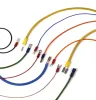
Event
Tensile Testing for Wiring Harness Connections
The only way of really knowing the strength of a crimped terminal is to pull it. This can reveal production problems, where strand nicks, incorrect crimp height, or effects from changes in terminal supply, may not be clearly apparent.
1283
[Page extract]
ASTM D622-99
ASTM D622 is a test method intended for use in testing the conventional types of hose employed for the operation of air brake and vacuum brake systems, either on a single motor vehicle or as connecting or transmission lines in a combination of vehicles<
1284
[Page extract]
ISO 11897
ISO 11897 specifies a method for the determination, under given conditions, of the resistance to tear propagation on an edge fold of sacks made from thermoplastic flexible film.
1285

Event
Tensile Testing for Wiring Harness Connections
The only way of really knowing the strength of a crimped terminal is to pull it. This can reveal production problems, where strand nicks, incorrect crimp height, or effects from changes in terminal supply, may not be clearly apparent.
1286
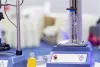
Event
Fundamentals of Compression Testing
Push or compressive testing helps determine the limits of most products that require constant pushing or compression.
1287
[Page extract]
ISO 527-4
ISO 527-4 determines the tensile properties of isotropic and orthotropic fibre reinforced plastic composite sheeting and film including the tensile strength and modulus of elasticity, strain, elongation and the tensile energy to break (TEB).
1288
[Page extract]
ASTM D1708
ASTM D1708 is used to determine the tensile and elongation properties of small plastic microtensile specimens. These plastic specimens can be of any thickness up to 3.2 mm (1/8 in), including thin films. This test method does not require the use of an
1289
[Page extract]
ASTM D4476 / D4476M-14
ASTM D4476 is a test method used to determine the flexural properties of fiber-reinforced pultruded plastic rods. The specimen used is a rod with a semi-circular cross section, moulded or cut from lengths of pultruded rods.
1290
[Page extract]
ASTM D2731
ASTM D2731 is a test method for determining the elastic properties of elastomeric yarns made from rubber, spandex or other elastomers. Elastic properties include force at specified elongations, permanent deformation and stress decay.
1291
[Page extract]
ASTM D6112-18
ASTM D6112 cover the determination of the creep and creep-rupture properties of plastic lumber and shapes, when loaded in compression or flexure under specified environmental conditions. Test specimens in the “as-manufactured” form are employed.
1292
[Page extract]
BS 6319-3
BS 6319-3 is a test method for determining the modulus of elasticity in flexure and flexural strength of resin and polymer/cement compositions for use in construction.
1293
[Page extract]
ASTM D1566
ASTM D1566 is a source of reference for definitions of technical terms used in the rubber industry
Standards can be obtained from appropriate standard authorities.
1294
[Page extract]
ASTM D7264 / D7264M-15
ASTM D7264 is a test method used to determine the flexural stiffness and strength properties of polymer matrix composites. The test method summarises two procedures:
1295
[Page extract]
BS EN 12814-4
BS EN 12814-4 is a peel test method for testing welded joints of thermoplastics semi-finished products.
1296
[Page extract]
ISO 20795-1
ISO 20795-1:2013 classifies denture base polymers and copolymers and specifies their requirements. It also specifies the test methods to be used in determining compliance with these requirements.
1297
[Page extract]
IEC 62137-1-1
The test method described in IEC 62137-1-1:2007 is applicable to gull-wing lead surface mounting components.
1298
[Page extract]
BS EN 2747
BS EN 2747 is a tensile test method for testing carbon fibre reinforced plastics.
Before conducting BS EN 2747, it is important to read the entire specification. Standards can be obtained from appropriate standard authorities.
1299
[Page extract]
Bend jigs
Flexural load tests are popular since they closely characterise how a material or component may perform during its lifetime.
1300
[Page extract]
BS EN ISO 21181
BS EN ISO 21181 is a test method for determining the relaxed elastic modulus of light conveyor belts.