Search results
2151
[Page extract]
Pharmaceuticals
The pharmaceutical industry is tightly controlled and subject to strict regulations, which means that testing is often at the heart of demonstrating compliance to the various international standards which govern the industry.
2152
[Page extract]
Introduction to needle penetration testing
Needle penetration testing is a precision method used to assess a material’s resistance to penetration by a needle or similar sharp probe.
2153
[Page extract]
TAPPI T 824 standard
Overview of the standard
TAPPI T 824 is the internationally recognised standard that specifies the procedures, equipment requirements, and specimen preparation methods for conducting
2154
[Page extract]
Introduction to fabric testing
Fabric testing plays a critical role in quality assurance, helping manufacturers assess the mechanical, physical, and chemical properties of textile materials.
2156
[Page extract]
Related tensile and shear test methods
While tensile tests measure a material’s resistance to stretching, shear tests measure resistance to sliding between layers or across a bond. Both are complementary.
2157
[Page extract]
Applications of bursting strength testing
Ball burst testing is routinely used across sectors where material failure under localised stress poses a risk to performance or safety. Common application areas include:
2158
[Page extract]
Introduction
ISO 11040-4 Annex F outlines the standardized method for testing the mechanical properties of pre-filled syringes, specifically focusing on needle penetration and drag.
2159
[Page extract]
Benefits and challenges
Benefits
Confirms materials meet design specifications
Ensures batch consistency in manufacturing
Identifies materials capable of maintaining performance throughout their service life
Challenges
2160
[Page extract]
Introduction to flat crush test
The flat crush test (FCT) is a recognised method for measuring the resistance of corrugated fibreboard to a compressive load applied perpendicularly to its surface.
2161
[Page extract]
What’s their secret?
“Prior to joining our class, most of our students had no actual experience with materials testing, apart from what they saw in a textbook.

2163
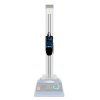
Sensor
เซ็นเซอร์ - MultiTest-dV
เซ็นเซอร์แรง MultiTest-dV เป็นเครื่องทดสอบที่มีความยืดหยุ่นสูงซึ่งสามารถกำหนดค่าได้ด้วย Advanced Force Gauge สำหรับการทดสอบผลิตภัณฑ์หรือ Enhanced Load Sensor สำหรับการทดสอบวัสดุพื้นฐาน AFG…
2164
Product
มาตรวัดแรงทางกล
ทางออกง่ายๆสำหรับการทดสอบแรงกดและแรงดึงแบบพื้นฐานที่ใช้ด้วยมือ เกจวัดแรงทางกลที่แข็งแกร่งออกแบบมาสำหรับการทดสอบแรงดึงและแรงอัดทั่วไปสูงสุด 440 นิวตัน ใช้งานง่ายด้วยปุ่มหมุนแบบอนาล็อกและตัวชี้เข็มเพื่อระบุแรงที่ใช้
2165

[Page extract]
Defence
Mecmesin supplies force, torque and materials testing equipment to defence contractors and their subcontractors around the world. These companies face stringent regulation in performance, quality and reliability..
2166
[Page extract]
BS ISO 7322
This International Standard specifies test methods for the determination of the following characteristics of composition cork (= product obtained from the agglutination of cork granules with the addition of a binder generally not derived from cork cells
2167
[Page extract]
แท่นทดสอบแบบใช้เครื่องยนต์
การทดสอบแรงซ้ำ กำลังมองหาเครื่องทดสอบแรงดึงหรือแรงอัดแบบใช้เครื่องยนต์เพื่อปรับปรุงความแม่นยำและความแม่นยำในการวัดซ้ำเมื่อเทียบกับเครื่องวัดแรงกดแบบแมนนวล?
2168
[Page extract]
ASTM D5528-13
ASTM D5528 is a test method, which determines the opening Mode I interlaminar fracture toughness of continuous fiber-reinforced composite materials. It uses a a double cantilever beam (DCB) specimen. Susceptibility to delamination is one of the major
2169
[Page extract]
ISO 10373-1
ISO/IEC 10373-1:2006 specifies the non-technology-specific test methods required to establish conformance of identification cards to the base (requirements) standards, for which the fundamental properties are defined in ISO/IEC 7810.
2170
[Page extract]
ISO 8094
ISO 8094 specifies a test method for determining the adhesion strength of the cover to the core layer. It applies exclusively to steel cord conveyor belts.
2171
[Page extract]
ASTM D6641 / D6641M - 16e1
The ASTM D6641 test method determines compressive properties of polymer composite materials by applying combined end-loading and shear-loading using a combined loading compression (CLC) fixture.
2172
[Page extract]
BS 6319-2
BS 6319-2 is a test method for determining the compressive strength of resin and polymer/cement compositions used in construction.
2173
[Page extract]
ASTM D378
The ASTM D378 test method is used for evaluating the physical properties of flat conveyor belting, which are used in many industrial applications in which they are subjected to a great variety of stresses and conditions.
2174
[Page extract]
Special compression fixtures
Special compression fixtures have been specially designed to meet the challenges of a particular application.
2175
[Page extract]
BS EN 12814-3
BS EN 12814-3 is a tensile creep test method for testing welded joints of thermoplastics semi-finished products.