Search results
1876
[Page extract]
Standards for the peel wheel test
Standardisation ensures peel wheel tests are consistent and repeatable across laboratories and production sites.
1877
[Page extract]
Simplify data analysis in force, materials and torque testing
Test calculations are the values derived from raw measurement data, such as peak force, torque angle, or modulus of elasticity. With advanced software, these are now calculated instantly and with high precision, replacing error-prone manual methods.
1878
[Page extract]
Built for batch testing and automation
Batch testing in VectorPro uses a pre-configured test to create a semi-automatic or fully automatic testing system on sets of products and batches of the products.
1879
[Page extract]
Standards for the 90-degree peel test
The 90-degree peel test is defined by several recognised international standards, which provide consistent methodology and reporting requirements:
1880
[Page extract]
Power and flexibility for your materials testing
Start measuring stress/strain, tensile, shear, flexure and compressive forces to evaluate your materials. It takes just a few minutes to create your own step-by-step test routines.
1881
[Page extract]
Procedure for tensile testing
While the specifics vary depending on material type and applicable standards, the general procedure includes:
1882
[Page extract]
Step-by-step procedure for reverse ratchet torque testing
Sample preparation
Condition the closures according to the specified standard to control environmental factors.
1883

[Page extract]
Mining & Metals
Metals are at the heart of many technologically-advanced industries including aerospace, automotive, electronics and medical not to mention the traditional sectors of construction, energy and machinery.
1884
[Page extract]
TAPPI T 400
This method describes procedures for obtaining a representative sample for testing.
1885
[Page extract]
BS 6319-11
BS 6319-11 is a test method for determining creep in compression and in tension for resin and polymer/cement compositions used in construction
1886
[Page extract]
BS 7882
This British Standard specifies the requirements for the calibration and classification of torque measuring devices including those used for the calibration of hand torque tools to BS EN 26789: 1994/
1887
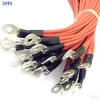
Event
Wire Crimp & Weld Testing Webinar
The only way of really knowing the strength of a crimped terminal is to pull it.
1888
[Page extract]
ASTM D413-98
ASTM D413 is a test method used to determine the force per unit width required to separate a rubber layer from a flexible substrate such as fabric, wire or sheet metal.
1889
[Page extract]
ISO 9073-3
Application of a force longitudinally to a test piece of a specified length and width at a constant rate of extension. Determination of values for breaking strength and elongation from the recorded force-elongation curve.
1890
[Page extract]
BS EN ISO 8295
ISO 8295 specifies a method for determining the coefficients of starting and sliding friction of plastics film and sheeting when sliding over the same or other substances. It is intended to be used for non-sticky plastic film and sheeting of up to appr
1891
[Page extract]
ASTM D3983
This test method describes a method of measuring the shear modulus and rupture stress in shear of adhesives in bonded joints.
1892
[Page extract]
DIN EN 1464
This European Standard specifies a floating roller method for the determination of the peel resistance of high-strength adhesive bonds between one rigid adherend and one flexible adherend when tested under specified conditions of preparation and testing
1893
[Page extract]
ISO 1805
ISO 1805 specifies a method of testing the breaking force and knot breaking force of netting yarns for fishing nets.
1894
[Page extract]
BS EN 17665
The Directive (EU) 2019/904 “on the reduction of the impact of certain plastic products on the environment” introduces the requirement that plastic caps and lids of single use plastic beverage containers up to 3 l capacity shall remain attached to the c
1895
[Page extract]
ASTM D6112-18
ASTM D6112 cover the determination of the creep and creep-rupture properties of plastic lumber and shapes, when loaded in compression or flexure under specified environmental conditions. Test specimens in the “as-manufactured” form are employed.
1896
[Page extract]
ASTM D2148
ASTM D2148 is a test standard that for testing bondable silicone rubber tapes, which form a sealed structure either with the application of heat (and pressure if needed) or by the process of auto-adhesion (self-fusing).
1897
[Page extract]
TAPPI T 840
This method describes a procedure for evaluating the adhesive used in glued lap joints of corrugated containers.
1898
[Page extract]
BS EN 14350-1
Resusable teats and drinking accessories
Resusable feeding bottles and drinking cups
Single use feeding bottles, feeding teats, feeding bags and drinking accessories, which do not contain fluid when purchased.
1899
[Page extract]
ASTM D5034-09
This test method covers the grab and modified grab test procedures for determining the breaking strength and elongation of most textile fabrics. Provisions are made for wet testing.