Search results
1176
[Page extract]
How the strip method works
The strip method involves cutting a specimen to a precise width, typically 50 mm or 25 mm depending on the applicable standard, and mounting it in the grips of a tensile testing
1177

Case study
Semi-automated penetration testing into plasterboard
Customised engineering example
British Gypsum (now Saint-Gobain) carry out repetitive penetration tests to accurately assess the performance and durability of their products.
1178
Case study
Adjustable spectacles torque test
Customised engineering example
Adlens manufacture adaptive spectacle lenses, where the optical power is adjusted by a side dial which is then removed.
1179
[Page extract]
Introduction to Delft tear testing
The Delft tear test is a specialised method for determining the tear strength of vulcanised rubber, thermoplastic elastomers and similar flexible materials.
1180
[Page extract]
BS EN ISO 4624
Describes methods for determining the adhesion by carrying out a pull-off test on a single coating or a multi-coat system of paint, varnish or related product.
1181
Case study
Cable duct strength testing
Customised engineering example
Our customer manufactures tubes and ducts for routing of cables and optical fibres. Installation of these uses blowing, pushing and pulling techniques.
1182
[Page extract]
Test type
Mecmesin provides solutions for tests on products or materials that require the measurement of their physical strength. Typically this involves applying and recording the force to pull apart, push together, twist or turn.
1183

Event
Tensile Testing for Wiring Harness Connections
The only way of really knowing the strength of a crimped terminal is to pull it. This can reveal production problems, where strand nicks, incorrect crimp height, or effects from changes in terminal supply, may not be clearly apparent.
1184
Case study
Champagne and sparkling wine cork twist extraction effort
Requirement
Solution
Test equipment
1185
[Page extract]
Introduction to tear resistance testing
Tear resistance testing is a critical mechanical property assessment for flexible materials such as plastics, elastomers, coated fabrics and textiles.
1186
[Page extract]
Application of standards in puncture testing
Standardised methods ensure test consistency and reliability across laboratories and production sites.
1187
Case study
Display thin film coating 90 degree peel test
Requirement
The Thin Film Centre at University of Paisley conducts ground-breaking research into flexible displays and required the means to analyse the adhesion between films and their substrates.
1188
[Page extract]
ASTM D4833-07
This test method is an index test for determining the puncture resistance of geomembranes and related products. The use of this test method is to establish an index value by providing standard criteria and a basis for uniform reporting.
1189
Case study
Inline respiratory filter pull test
Customised engineering example
A manufacturer of filtration products needed to test the extraction force of a respiratory filter when pulled from within an inline medical device.
1190
[Page extract]
Why is texture testing important?
Texture testing ensures consistent product performance, supports process control, and validates compliance with industry standards. Even small changes in raw materials, processing conditions, or environmental factors can alter texture.
1191

Event
Texture Testing for Bakery Applications
The primary goal for using instrumentation to measure texture is to capture an objective value to something that is typically evaluated very subjectively. Texture cannot be controlled unless it measured in a consistent and repeatable manner.
1192
[Page extract]
What is the box crush test?
The box crush test (BCT) is a widely used method for measuring the compressive strength of fibreboard packaging, particu
1193
Case study
Diamante pull-off test
Requirement
The customer was a supplier to major UK clothing retailer Marks & Spencer, who stipulate that all fasteners and attachments must be tested to failure.
1194
[Page extract]
Step-by-step guide to conducting the ring crush test
Prepare the sample
Cut samples to the required size specified by the relevant standard, typically corresponding to a circumference of 152 mm. Condition the samples at the specified temperature and humidity.
1195
[Page extract]
Understanding the stress-strain curve
The stress-strain curve is a primary tool for tensile strength analysis. It shows how a material responds to an increasing tensile load, providing detailed insights into its mechanical properties.
1196
[Page extract]
Introduction to compressive strength testing
Compressive strength testing is essential for evaluating the ability of materials to withstand axial loads, which are forces that push or pull them.
1197
[Page extract]
What is the 135° peel test?
The 135° peel test is a method for measuring the seal strength of semi-rigid packaging, typically where a flexible lid is sealed onto a rigid or vacuum-formed container.
1198
[Page extract]
BS EN 12209
BS EN 12209:2016 specifies requirements and test methods for the durability, strength, security, and function of mechanically operated locks and latches and their locking plates for use in doors, window doors and entrance doors in buildings.
1199
Case study
Hygienic disposal bin closure testing
Customised engineering example
A manufacturer of hygienic disposal bins came to us with a nappy (diaper) disposal unit fitted with a rotary intake mechanism.
1200
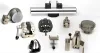
Event
Essentials of grip & fixture selection in force & torque testing
For a test to work, the test system needs to properly interface with its specimen.