Search results
2201
[Page extract]
BS EN ISO 3386
BS EN ISO 3386-1 specifies a method for the determination of the compression stress/strain characteristic of low-density flexible cellular materials up to 250 kg/m3.
2202
[Page extract]
ASTM D3916
ASTM D3916 is a test method for determining the tensile properties of pultruded, glass-fiber-reinforced thermosetting plastic rod of diameters ranging from 3.2 mm to 25.4 mm.
2203
[Page extract]
ASTM D2339
By the nature of the way adhesives are used in two-ply wood construction, shear strength is an important performance criteria.
2204
[Page extract]
ISO 16047
ISO 16047:2005 specifies the conditions for carrying out torque/clamp force tests on threaded fasteners and related parts.
2205
[Page extract]
ISO 37
ISO 37 specifies a method for the determination of the tensile stress-strain properties of vulcanized and thermoplastic rubbers.
This test standard is equivalent to BS ISO 37.
2206
[Page extract]
BS EN 2591-412
Covers a method of assessing the insertion/extraction forces for contacts used in elements of connection.
2207
[Page extract]
ASTM D6068-10
This test method covers the determination of the J-integral versus crack growth resistance (J-R) curves for polymeric materials.
2208
[Page extract]
BS EN 14372
This document establishes minimum safety requirements and specifies appropriate test methods for children’s cutlery and feeding utensils designed for the use of children aged up to 3 years, with or without parental supervision.
2209
[Page extract]
ASTM D3574
ASTM D3574 is a test method used for testing soft polyurethane foam used in car seats, mattresses, pillows and other foam products. Samples come in a variety of forms including slab, bonded, and molded flexible cellular urethane foams.
2210
[Page extract]
ASTM D7137 / D7137M-17
ASTM D7137 is a test method that measures the compression residual strength properties of multidirectional polymer matrix composite laminated plates, which have been subjected to quasi-static indentation
2211
[Page extract]
ASTM D3106
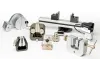
This test method covers the determination of the permanent deformation of bare, continuous elastomeric monofilaments and filament yarns made from rubber, spandex, anidex, or other elastomers subjected to prolonged periods of tension.
2213
[Page extract]
ISO 1827
ISO 1827 specifies methods for the determination of the modulus in shear and the strength of bonds of rubber to metal or other rigid plates, using rubber bonded between four parallel plates.
2214
[Page extract]
ASTM D3039 / D3039M
ASTM D3039 determines the in-plane tensile properties of polymer matrix composite materials reinforced by high-modulus fibers. A number of calculations can be made including ultimate tensile strength, ultimate tensile strain, tensile chord modulus of
2215

Event
Packaging: Peel & Adhesion testing
Adhesion strength is a key factor in packaging, providing reliability and durability for a wide range of products.
Whether it's ensuring that a shipping box remains sealed during transit or that labels stay firmly attached to containers, the a
2216
[Page extract]
TAPPI T 825
The flat crush test (1) is a measure of the resistance of the flutes in corrugated board to a crushing force applied perpendicular to the surface of the board under prescribed conditions.
2217
[Page extract]
BS EN 12311-2
BS EN 12311-2 is a test method for determining the tensile properties of flexible sheets used for waterproofing roofs.
2218
[Page extract]
BS EN 1393
BS EN 1393 specifies a test method for testing the longitudinal tensile properties of glass-reinforced thermosetting plastics (GRP) pipes.
2219

Event
Fundamentals of Texture Testing Analysis
The primary goal for using instrumentation to measure texture is to capture an objective value to something that is typically evaluated very subjectively. Texture cannot be controlled unless it measured in a consistent and repeatable manner.
2220
[Page extract]
ISO 8362-7
This part of ISO 8362 specifies aluminium-plastics combinations for the injection caps of injection vials, as specified in ISO 8362-1 and ISO 8362-4, where the plastics part does not overlap the diameter of the vial body. Section 6.2 Force required to
2221

Event
Cap Closure and Removal Torque Testing
The primary objective for measuring and analyzing the torque characteristics of a container cap is to accurately determine not only the quality of the part or process, but also the root cause of a wide variety of defects.
2222
[Page extract]
BS EN 71-1
This European Standard specifies different forces or loads to be used when testing toys intended for children of different age groups.
2223

Event
Fundamentals of Texture Testing Analysis
The primary goal for using instrumentation to measure texture is to capture an objective value to something that is typically evaluated very subjectively. Texture cannot be controlled unless it measured in a consistent and repeatable manner.
2224
[Page extract]
PSTC 131
SCOPE
1.1 The procedures in this test method describe the measurement of breaking strength, elongation
at break, and energy to break, of pressure sensitive tapes.
2225
[Page extract]
ASTM F2606-08
This guide can be used to obtain force versus deflection or midspan bending moment versus midspan curvature curves for stents and stent systems subjected to three-point bending conditions.