Search results
2376
[Page extract]
ISO 5079
Describes method and conditions of test for the determination of the breaking force and elongation at break of individual fibres in the conditioned or wet state. The test is restricted to the use of constant-rate-of-extension testing apparatus.
2377
[Page extract]
BS ISO 3384-1:2001+A1
BS ISO 3384-1 is a test method for determining the stress relaxation in compression of vulcanised rubber or thermoplastic.
2378
[Page extract]
ASTM D905-08
This test method covers the determination of the comparative shear strengths of adhesive bonds used for bonding wood and other similar materials, when tested on a standard specimen under specified conditions of preparation, conditioning, and loading in
2379
[Page extract]
BS EN 12655
Gymnastics equipment, Sports equipment, Safety measures, Equipment safety, Classification systems, Dimensions, Height, Strength of materials, Stability, Mechanical testing, Vertical, Horizontal, Performance testing, Instructions for use
2380
[Page extract]
ASTM D6534-05
This test method covers the determination of the peak force-to-actuate, sometimes called force-to-actuate (FTA), of a mechanical pump dispenser.
2381
[Page extract]
BS EN 863
Protective clothing, Clothing, Perforating tests, Penetration tests, Mechanical testing, Tensile testing, Test equipment, Specimen preparation, Performance testing
2382
[Page extract]
ASTM D1002
This test method covers the determination of the apparent shear strengths of adhesives for bonding metals when tested on a standard single-lap-joint specimen and under specified conditions of preparation and test.
2383
[Page extract]
ISO 12236
Specifies a method for the determination of the puncture resistance by measuring the force required to push a flat-ended plunger through geosynthetics.
2384
[Page extract]
BS EN 12242
The BS EN 12242 test method is used to determine the peel strength of a touch and close (also known as “hook and loop”) fastener through a 180° peel test that is able to determine average peel and the peel strength characteristics of the product for a g
2385
[Page extract]
ASTM D1876
This test method measures the peel separation strength of two flexible materials that have been bonded together.
2386
[Page extract]
BS EN ISO 13934-1
Part 1 of ISO 13934 specifies a procedure to determine the maximum force and elongation at maximum force of textile fabrics using a strip method.
2387
[Page extract]
Why Mecmesin for breakaway torque testing?
Mecmesin offers an unmatched combination of reliability, support, and industry insight:
2388
[Page extract]
ISO 1924-3
Specifies a method for measuring the tensile strength, strain at break, tensile energy absorption and tensile stiffness, using a testing machine operating with a constant rate of elongation (100 mm/min).
2389
[Page extract]
BS EN 17394-2
This document defines a test method for security of attachment of functional and decorative buttons to clothing including garments such as gloves, hats, scarves, hosiery, ties, and textile belts. The scope of this document is limited to sewn-on buttons,
2390
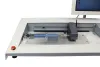
Event
Understanding Adhesion Strength: 180 Degree Peel Test
Across many households and industries, consumers have developed a strong preference for and confidence in ‘Duct Tape’ for all types of uses and applications. This is mainly due to the adhesion strength.
2391
[Page extract]
ISO 12192
Specifies a method for the determination of the edgewise compressive strength (ring crush resistance) of paper and paperboard, especially board used in the manufacture of fibreboard shipping containers.
2392
[Page extract]
ASTM D7078/D7078M-12
This test method covers the determination of the shear properties of high-modulus fiber-reinforced composite materials by clamping the ends of a V-notched specimen between two pairs of loading rails.
2393
[Page extract]
ASTM D6862-11
This test method is useful for acceptance and quality control testing. Adherends, application procedure, and sample conditioning shall be as agreed upon by the manufacturer and the user of the adherends and the adhesive.
2394
[Page extract]
ISO 8009
ISO 8009:2004 specifies the minimum requirements and test methods to be used for reusable diaphragms made from natural rubber and silicone rubber. These diaphragms are intended for contraceptive use.
2395
[Page extract]
ISO 1966
Describes the design requirements and tests for the crimping of insulated and non-insulated terminations to general purpose cables, with conductors of copper, copper alloy, aluminium or aluminium alloy, in locations in which the stabilized conductor tem
2396
[Page extract]
ISO 178
ISO 178 is a test method for the determination of flexural properties of rigid and semi-rigid plastics. These properties include flexural modulus and flexural strength.
2397

Case study
Peel testing Ostomy bags
Requirement
Salts Healthcare, a leading manufacturer and supplier of health care products required a low capacity system for testing the integrity of their hydrocolloid products.
2398
[Page extract]
ISO 34-2
ISO 34-2 specifies a method for the determination of the tear strength of small test pieces (Delft test pieces) of vulcanized or thermoplastic rubber.
2399
[Page extract]
Wedge grips
Wedge grips - consisting of 2 interchangeable or fixed jaws in the shape of a wedge which are secured in a metal body.
2400

Event
Essentials of Cork Pull & Cork Elasticity Testing
Cork stoppers are extremely successful wine bottle closures that have been in use from ancient times.