Search results
1276
[Page extract]
ISO 20126
This International Standard specifies requirements and test methods for the physical properties of manual toothbrushes in order to promote the safety of these products for their intended use.It does not apply to manual interdental brushes and powered or
1277
[Page extract]
EN 22872
EN 22872 specifies two methods for testing complete, filled transport packages for compression resistance.
1278
[Page extract]
ISO 2493-1
Specifies procedures, based on the two-point loading principle, for determining the bending resistance of paper and board.
1279
[Page extract]
ASTM D2344 / D2344M
ASTM D2344 is a test method, which determines the short-beam strength of high-modulus fiber-reinforced composite materials. It is applicable to all types of parallel fiber reinforced plastics and composites.
1280
[Page extract]
ASTM D378
The ASTM D378 test method is used for evaluating the physical properties of flat conveyor belting, which are used in many industrial applications in which they are subjected to a great variety of stresses and conditions.
1281
[Page extract]
ASTM D3410 / D3410M
ASTM D3410 determines the compressive properties of polymer matrix composite materials reinforced by high-modulus fibers.
1282
[Page extract]
ASTM D5034-09
This test method covers the grab and modified grab test procedures for determining the breaking strength and elongation of most textile fabrics. Provisions are made for wet testing.
1283
[Page extract]
Real-world examples
Beverage packaging automation
A global beverage brand integrated the VortexPro into its testing line for PET bottle caps. Results included:
1284
[Page extract]
NF B 57 100
Section 8 covers the measurement of the tensileforce to extract a natural or synthetic cork from a still wine bottle or from a standardised glass tube, which simulates the profile of the neck of a wine bottle.
1285
[Page extract]
Introduction to fabric testing
Fabric testing plays a critical role in quality assurance, helping manufacturers assess the mechanical, physical, and chemical properties of textile materials.
1286
[Page extract]
Future trends in torque testing
Automation is becoming increasingly common, improving accuracy and enabling in-line testing during production.
1287
[Page extract]
Introduction to strip method tensile testing
Among the range of tensile testing techniques, the strip method is widely recognised for its accuracy and repeatability.
1288
[Page extract]
Manual test stands
Manual test stands allow simple force testing when budgets are limited.
Lever-operated models enable rapid testing of tension and compression up to 500 N.
1289
[Page extract]
ASTM D6112-18
ASTM D6112 cover the determination of the creep and creep-rupture properties of plastic lumber and shapes, when loaded in compression or flexure under specified environmental conditions. Test specimens in the “as-manufactured” form are employed.
1290
[Page extract]
CETIE Guide 12
This guide describes the five essential rules to be observed to properly crimp a pump with an aluminium ferrule on an FEA type glass finish used for perfumery, according to the EN 14854 standard and the Cetie document GME 40.05.
1291
[Page extract]
ISO 505
ISO 505 specifies a method of test for the measurement of the propagation resistance of an initial tear in textile conveyor belts, either in full thickness or of the carcass only.
1292
[Page extract]
ISO 7886-4
This document specifies requirements for sterile single-use hypodermic syringes made of plastic and rubber materials with or without needle, and intended for the aspiration of fluids or for the injection of fluids immediately after filling and of design
1293
[Page extract]
ISO 7623
ISO 7623 specifies a method for determining the bond strength of metal cords to their surrounding coating, either in the initial state or after thermal treatment.
1294
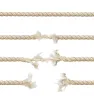
Event
Tensile Testing: Pull Force & Break Strength
Whether it is medical tubing, plastic straws, copper wire or zip ties, pull force and break strength testing is critical not only to production quality but also to consumer safety.
1295
[Page extract]
BS ISO 7322
This International Standard specifies test methods for the determination of the following characteristics of composition cork (= product obtained from the agglutination of cork granules with the addition of a binder generally not derived from cork cells
1296
[Page extract]
ISO 6922
Specifies a method for determining the bond strength of a butt joint when subjected to tensile force. The method is applicable to all types of adhesives.
1297
[Page extract]
Evaluating mechanical properties
Flexural tests yield valuable data on strength, stiffness, and toughness. By examining stress-strain curves from flexural tests, engineers can assess:
1298
[Page extract]
Introduction to peel wheel testing
The peel wheel test is a specialised adhesion test method used to measure the strength of adhesive bonds in flexible materials such as plastics, films, and laminates.
1299
[Page extract]
Puncture and shear testing techniques and equipment
Testing involves applying a force to a clamped specimen until the material fails, with the method determined by the applicable standard.
1300
[Page extract]
Methods and applications
Common test methods
Most single lap shear tests are carried out under tensile loading, but the method can vary depending on material type, bond configuration and industry require