Search results
676
[Page extract]
Introduction to compressibility and recovery testing
Compressibility and recovery testing measures how a material behaves under load and how effectively it returns to its original form once the load is removed.
677
[Page extract]
ASTM D7257-06
This test method of applying force may be used as a standard test to compare the characteristics of a given design of container/child-resistant closure system with a standard or to compare the characteristics of container/child resistant closure systems
678

Event
Medical Device Testing: Needle sharpness and syringe actuation testing (with 21 CFR Part 11 compliance)
Hypodermic needles are tested to determine their efficacy in piercing elastomer closures on vials and how their design influences the ease of insertion into the patient's skin, influencing pain and skin trauma.
The smooth and consistent operat
679
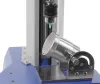
Event
Needle Sharpness & Puncture Resistance Testing
Hypodermic needles are tested to determine how their design influences the ease of insertion into the skin in order to prevent patient pain and skin trauma.
680
[Page extract]
Standards and guidelines
Accurate and comparable cleavage strength testing depends on following recognised international standards.
681
Accessory
Blank (smooth) jaws for Mec240g U-Form Vice Grip, 5 kN, 30 x 80 mm
Mec240g-B80
Blank Jaws (30mm x 80mm) - smooth steel jaw. Allows user to machine or affix own surface (eg. abrasive 'emery' paper).
Opening span = see datasheet for various spans according to the grip body selected.
Supplied as 0.5 set = 2 jaws (left…
682
[Page extract]
Springs
Springs are elastic objects used to store mechanical energy and they change shape in response to external forces, returning to their original shapes when the forces are removed.
683
[Page extract]
ISO 13939
Describes a method of comparing the performance test results of foil journal bearings, which are lubricated by air (gas) and supported by hydrodynamic force generated by the rotation of the rotating shaft.
684
Accessory
Blank (smooth) jaws for Mec83 U-Form Pneumatic Vice Grip, 5 kN, 40 x 100 mm
Mec83-B100
Blank Jaws (40mm x 100mm) - smooth steel jaw. Allows the user to machine or affix own surface (eg. abrasive 'emery' paper).
Opening span = 0-10mm, 10-20mm or 20-30mm depending on which rod and piston are fitted to the Mec83 body.
Supplied as 0.5 set = 2…
685
Accessory
Pyramid (serrated) jaws for Mec83 U-Form Pneumatic Vice Grip, 5 kN, 60 x 200 mm
Mec83-BP200
Pyramid Jaws (60mm high x 200mm wide) - nickel-plated having a surface of hardened steel pyramids of 1.2mm tall.
Opening span = 0-10mm, 10-20mm or 20-30mm depending on which rod and piston are fitted to the Mec83 body.
For materials which need a “bite…
686

Case study
90 degree peel test filter paper
Customised engineering example
Floating roller peel jigs are regularly used for testing laminates where the backing sheet is rigid and the facing sheet is flexible (e.g. security cards)
687
Accessory
Blank (smooth) jaws for Mec240g U-Form Vice Grip, 5 kN, 30 x 80 mm
Mec240g-B80
Blank Jaws (30mm x 80mm) - smooth steel jaw. Allows user to machine or affix own surface (eg. abrasive 'emery' paper).
Opening span = see datasheet for various spans according to the grip body selected.
Supplied as 0.5 set = 2 jaws (left…
688
Accessory
Blank (smooth) jaws for Mec240g U-Form Vice Grip, 5 kN, 30 x 50 mm
Mec240g-B
Blank Jaws (30mm x 50mm) - smooth steel jaw. Allows user to machine or affix own surface (eg. abrasive 'emery' paper).
Opening span = see datasheet for various spans according to the grip body selected.
Supplied as 0.5 set = 2 jaws (left…
689
[Page extract]
Selecting compression testing equipment
Choosing the right testing system is critical for accurate and repeatable results. Factors such as force range, sample type and testing throughput influence equipment selection.

691
Accessory
Blank (smooth) jaws for Mec83 U-Form Pneumatic Vice Grip, 5 kN, 40 x 60 mm
Mec83-B
Blank Jaws (40mm x 60mm) - smooth steel jaw. Allows the user to machine or affix own surface (eg. abrasive 'emery' paper).
Opening span = 0-10mm, 10-20mm or 20-30mm depending on which rod and piston are fitted to the Mec83 body.
Supplied as 0.5 set = 2…
692
Accessory
Pyramid (serrated) jaws for Mec83 U-Form Pneumatic Vice Grip, 5 kN, 40 x 100 mm
Mec83-BP100
Pyramid Jaws (40mm high x 100mm wide) - nickel-plated having a surface of hardened steel pyramids of 1.2mm tall.
Opening span = 0-10mm, 10-20mm or 20-30mm depending on which rod and piston are fitted to the Mec83 body.
For materials which need a “bite…
693

Event
Understanding Top-Load Testing - Live Application Demo
Packaging manufacturers use top-load or crush testing to ensure packaging integrity, and to eliminate material excess while maintaining quality.
694
[Page extract]
Gels and hydrocolloids
Gels and hydrocolloids such as agar, gelatin, xanthan and guar gum, etc. are widely used in the food, cosmetics/personal care, and medical/pharmaceutical industries.
695
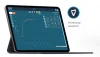
Event
Webinar: VectorPro Software - The ultimate platform for force & materials testing
In today's fast-paced product testing landscape, consistency and repeatability are paramount.
And software can be the key.
VectorPro Software is the game-changer you've been waiting for, equipped with a suite of features that guarant
696
[Page extract]
Physiology
We exert force and torque with our muscles in almost all our everyday activities.
697
[Page extract]
Types of testing methods
Electromechanical and servohydraulic systems
Two main actuation technologies are used in tension and compression testing: electromechanical systems and servohydraulic systems.
698
[Page extract]
What is the trapezoidal tear test?
The trapezoidal tear test is a mechanical method used to determine the tear strength of flexible sheet materials.
699
[Page extract]
Understanding reverse ratchet torque
Reverse ratchet torque testing is an essential process for verifying the safety and reliability of child-resistant closures (CRCs).
700
[Page extract]
Secant modulus compared to other moduli
Different moduli are used to describe the stiffness of materials, each calculated at different points on the stress-strain curve: