Search results
1101

Event
Tensile Testing: Basics, Tips, & Trends
Have you ever wondered if the seatbelt in your vehicle is strong enough to restrain you in a collision? How about the average person pulling the cork out of a wine bottle?

1104
Event
Tensile Testing: Basics, Tips, & Trends
Have you ever wondered if the seatbelt in your vehicle is strong enough to restrain you in a collision? How about the average person pulling the cork out of a wine bottle?
1105

Event
Tensile Testing: Basics, Tips and Trends
Have you ever wondered if the seatbelt in your vehicle is strong enough to restrain you in a collision? How about the average person pulling the cork out of a wine bottle?
1106
[Page extract]
BS EN ISO 9626
This International Standard specifies the dimensions, surface and mechanical properties of normal- and thin-walled tubing of designated metric sizes 3,4 mm to 0,3 mm, and of extra-thin-walled tubing of designated metric sizes 2,1 mm to 0,6 mm.
1107
Event
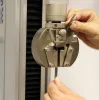
Essentials of GRIP & FIXTURE Selection in Force & Torque Testing Webinar
When physically testing a material or component, the ability to apply load to a test specimen is important—but having the ability to apply that load correctly is just as crucial.
1108
[Page extract]
BS EN ISO 527-1
BS EN ISO 527-1 specifies the general principles for determining the tensile properties of plastics and plastic composites under defined conditions.
1109
[Page extract]
ASTM D903-98
ASTM D903 is a test procedure used to determine the strength of adhesive bonds.
1110
[Page extract]
ASTM D2659
ASTM D2659 determines the mechanical properties of blown thermoplastic containers under columnar crush conditions at a steady rate of compression. Any container, whether blown commercially or in the laboratory, may be used as the test specimen.
1111
[Page extract]
ISO 14126
ISO 14126 outlines procedures for determining the compressive properties of fibre-reinforced plastics composites in the in-plane direction. Two methods are detailed in the standard:
1112
[Page extract]
ISO 604
ISO 604 specifies a method for determining the compressive properties of plastics in the form of standard test specimens when tested under defined conditions of pretreatment, temperature, humidity and testing machine speed.
1113
Event
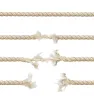
Tensile Testing: Pull Force & Break Strength
Whether it is medical tubing, plastic straws, copper wire or zip ties, pull force and break strength testing is critical not only to production quality but also to consumer safety.
1115
[Page extract]
BS EN ISO 4624
Describes methods for determining the adhesion by carrying out a pull-off test on a single coating or a multi-coat system of paint, varnish or related product.
1116
[Page extract]
ASTM C133-97
ASTM C133-97 outlines standardized test methods for determining the cold crushing strength and modulus of rupture of refractory materials.
1117
Event
Fundamentals of Torque Testing
If you have ever struggled to open your favorite bottle of water or jam or required help loosening the lug nuts on your car’s wheels, it is likely due to a case of over-torque.
1118
[Page extract]
TAPPI T 840
This method describes a procedure for evaluating the adhesive used in glued lap joints of corrugated containers.
1119
[Page extract]
ASTM D3528
This test method covers the determination of the tensile shear strengths of adhesives for bonding metals when tested in an essentially peel-free standard specimen that develops adhesive stress distribution representative of that developed in a typical l
1120
[Page extract]
BS 8888
BS 8888:2013 is the newly amended up to date technical product specification (TPS) that brings together, in one easy-to-follow document, all international standards needed to prepare technical product specifications (TPS), in accordance with geometrical
1121
[Page extract]
ISO 11608-5
This part of ISO 11608 specifies requirements and test methods for the automated functions of needle-based injection systems with automated functions (NIS-AUTO), for the administration of medicinal products in humans.
1122
[Page extract]
ASTM D6415 / D6415M-06a
ASTM D6415 is designed to measure the curved beam strength properties of fiber reinforced composites using a 90˚ curved beam specimen. The curved beam strength represents the moment per unit width which causes a delamination to form.
1123

Event
Tensile Testing: Basics, Tips and Trends
Have you ever wondered if the seatbelt in your vehicle is strong enough to restrain you in a collision? How about the average person pulling the cork out of a wine bottle?
1124
[Page extract]
SAE J174M
This test procedure is intended to provide a quality control method for checking torque-tension characteristics of non-prevailing torque type threaded steel fasteners 6 through 24 mm nominal diameters.
1125
[Page extract]
BS EN ISO 71-2
BS EN 71-2 covers the flammable materials which are prohibited in all toys and the requirements concerning flammability of certain toys when exposed to fire.