Search results
1276
[Page extract]
Bend jigs
Flexural load tests are popular since they closely characterise how a material or component may perform during its lifetime.
1277
[Page extract]
IEC 61196-1-308
IEC 61196-1-308:2012(E) applies to coaxial communication cables. It specifies test methods for tensile strength and percentage elongation at fracture for annealed and hard-drawn solid copper clad metals to be used as inner conductor for coaxial cables.
1278

Event
Tensile Testing: Basics, Tips and Trends
Have you ever wondered if the seatbelt in your vehicle is strong enough to restrain you in a collision? How about the average person pulling the cork out of a wine bottle?
1279
[Page extract]
CETIE Guide 18
This document provides a collection of test methods for the qualification of plastic flat-top closures applied on PET bottles that are used in the beverage industry.
1280
Event
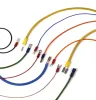
Tensile Testing for Wiring Harness Connections
The only way of really knowing the strength of a crimped terminal is to pull it. This can reveal production problems, where strand nicks, incorrect crimp height, or effects from changes in terminal supply, may not be clearly apparent.
1281
[Page extract]
ASTM D1621
ASTM D1621 is used to measure the compressive properties of rigid cellular materials, particularly expanded plastics. Calculations include compressive strength, compressive strain, compressive stress and compressive modulus.
1282
[Page extract]
ASTM D7030-04
This test method covers determining the resistance of an empty paper corrugated shipping container to a vertically applied constant compression load for a specified time.
1283
[Page extract]
ISBT PTC-00004
These ISBT (International Society of Beverage Technologists) Sport Closure test methods focus on child safety related parameters such as separation forces and choking hazards of closure components.
1284
[Page extract]
ASTM C972
Tape sealants are tacky, deformable solids used under compression between two or more surfaces of similar or dissimilar materials in a variety of sealing applications.
1285
[Page extract]
Puncture/penetration jigs
Puncture tests are performed to determine the resistance of a material to a sharp or blunt object passing right through it. As such, they normally require the measurement of a peak load.
1286
[Page extract]
PD CEN/TR 17394-3
This document defines a test method for security of attachment of functional and decorative metal mechanically applied press fasteners to children's clothing including for example gloves, hats, scarves, hosiery, ties, and textile belts.
1287

Event
Tensile Testing for Wiring Harness Connections
The only way of really knowing the strength of a crimped terminal is to pull it. This can reveal production problems, where strand nicks, incorrect crimp height, or effects from changes in terminal supply, may not be clearly apparent.
1288
[Page extract]
ASTM D3166
This test method covers the measurement of fatigue strength in shear by tension loading of adhesives on a standard specimen and under specified conditions of preparation, loading, and testing.
1289
[Page extract]
ISO 34-1
ISO 34-1 measures tear strength test methods for rubber test samples. The test results in measurement of a materials resistance to tearing. Tear strength can also be used to monitor material anisotropy of a material.
1290
[Page extract]
ISO 11747
ISO 11747 specifies a method for the determination of resistance to extrusion of milled rice kernels, parboiled or not parboiled, after cooking under specified conditions.
1291

Event
Fundamentals of Compression Testing
Push or compressive testing helps determine the limits of most products that require constant pushing or compression.
1292
[Page extract]
ASTM D3846
ASTM D3486 is a test method used for evaluating the in-plane strength of reinforced thermosetting plastics in flat sheet form in thicknesses ranging from 2.54 to 6.60 mm.
1293
[Page extract]
ISO 2439
The indentation hardness of flexible cellular materials is a measure of their load-bearing properties.
1294
[Page extract]
ISO 3377-2
ISO 3377-2:2016 specifies a method for determining the tear strength of leather using a double-edged tear. The method is sometimes described as the Baumann tear. It is applicable to all types of leather.
1295
[Page extract]
ASTM D412-16
ASTM D412 is a test standard for testing the tensile stress-strain properties of thermoset rubbers and thermoplastic elastomers. The standard is divided into two test methods.
1296
[Page extract]
BS EN ISO 527-1
BS EN ISO 527-1 specifies the general principles for determining the tensile properties of plastics and plastic composites under defined conditions.
1297

Event
Materials Testing: Theory and Practice Pt. 1
Materials testing is often the last step in the manufacturing process. Yet, quality is the result of both the process and the material. If the material that goes into the product is inadequate or defective, then the product may be deficient or faulty.
1298
[Page extract]
ISO 29862
This test standard specifies a series of methods for the determination of peel adhesion properties of self adhesives tapes.
1299
[Page extract]
ASTM D6068-10
This test method covers the determination of the J-integral versus crack growth resistance (J-R) curves for polymeric materials.