Search results
1326
[Page extract]
Measurement and testing methods
Techniques for measuring tangent modulus
Tangent modulus is measured during tensile or compression testing, w
1327
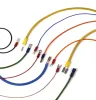
Event
Tensile Testing for Wiring Harness Connections
The only way of really knowing the strength of a crimped terminal is to pull it. This can reveal production problems, where strand nicks, incorrect crimp height, or effects from changes in terminal supply, may not be clearly apparent.
1328
[Page extract]
Introduction to chord modulus
Chord modulus is a key parameter in material testing, providing engineers and quality control teams with a precise measure of a material’s stiffness under defined loading conditions.
1329
[Page extract]
What is the box crush test?
The box crush test (BCT) is a widely used method for measuring the compressive strength of fibreboard packaging, particu
1330
Page
Contact support
Thank you for contacting our support team
One of our Support Engineers or your local partner will be in touch soon.
1331

Case study
Champagne and sparkling wine cork twist extraction effort
Requirement
Solution
Test equipment
1332
[Page extract]
Comparison with other bending methods
While the five-point bend test is designed to evaluate planar shear, other bending methods address different mechanical behaviours:
1333
Case study
Insulation film stiffness testing
Customised engineering example
Familiar with three-point bending to test flexural strength properties?
1334
[Page extract]
Comparing FCT with CMT
The flat crush test measures the compressive strength of the fluted structure in finished board, taking into account liners and adhesives.
1335
[Page extract]
Speak to an expert
Cleavage strength testing is essential for confirming material and adhesive performance in demanding applications.
1336
Case study
Hygienic disposal bin closure testing
Customised engineering example
A manufacturer of hygienic disposal bins came to us with a nappy (diaper) disposal unit fitted with a rotary intake mechanism.
1337
[Page extract]
BS EN ISO 4624
Describes methods for determining the adhesion by carrying out a pull-off test on a single coating or a multi-coat system of paint, varnish or related product.
1338
[Page extract]
Introduction to elongation and recovery testing
In industries working with textiles, rubber, elastomers, and flexible plastics, these properties are directly linked to product reli
1339
[Page extract]
How the strip method works
The strip method involves cutting a specimen to a precise width, typically 50 mm or 25 mm depending on the applicable standard, and mounting it in the grips of a tensile testing
1340
Case study
Medical devices testing
Requirement
To provide a low cost, flexible tensile test machine which could be used in conjunction with special fixturing, to perform a range of functional and destructive tests on a range of products.
1341
[Page extract]
Peel test procedure - step by step
Prepare the specimen: Cut and condition according to the relevant standard.
Set up the machine: Install the correct fixture for the test type.
1342
[Page extract]
Tension testing process
Tension testing is the most common method for evaluating tensile deformation and produces quantitative data on how materials behave under controlled pulling forces.
1343
[Page extract]
Understanding peel resistance
Peel resistance is the force required to separate two bonded surfaces through a peeling motion. This force is measured using a tensile test system equipped with a peel fixture.
1344
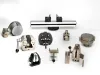
Event
Webinar: Master Grips & Fixtures for Consistent Testing
When physically testing a material or component, the ability to apply load to a test specimen is important—but having the ability to apply that load correctly is just as crucial.
1345
[Page extract]
Speak to an expert
Choosing the right configuration for a peel test is essential to obtain meaningful data. Test speed, specimen type, fixture design and data analysis all influence the results.
1346
[Page extract]
BS EN 12209
BS EN 12209:2016 specifies requirements and test methods for the durability, strength, security, and function of mechanically operated locks and latches and their locking plates for use in doors, window doors and entrance doors in buildings.
1347
Case study
Engine fuel pump spring characteristics measurement
Requirement
One of the largest automotive parts manufacturers in the Czech Republic, part of a major group, required a number of its component parts tested under high loads.
1348
[Page extract]
Importance of ergonomic strength testing
Ergonomic strength testing is essential for ensuring that human performance matches task requirements. This alignment reduces the risk of musculoskeletal injuries and improves long-term health outcomes.
1349
[Page extract]
Applications of the peel wheel test
The peel wheel test is relevant to industries where adhesion performance is critical to product function, safety, or durability.
1350
Case study
Sports shoe cleats release torque
Requirement
A leading golf shoe supplier needed to measure the release torque of the interchangeable cleats in its range of sports footwear.