Search results
901
[Page extract]
ASTM D2646
These test methods may be used for acceptance testing of commercial shipments; however, caution is advised because information about between interlaboratory precision is incomplete. Comparative tests as directed in 5.1.1 may be advisable.
902

Event
2022 Medical Technology Ireland, Galway, Ireland - We would love to see you there!
Who should attend?
Quality Managers and design/product engineers involved in the development and production of medical and pharmaceutical devices and packaging.
What is the exhibition about?
903
[Page extract]
CETIE Guide 7
This guideline applies to the screw capping of still wines with a metallic closure having a threaded plastic insert and a tamper-evident band which needs to be snapped before it can be opened. The closure is screwed and crimped during capping.
904

Event
Webinar: Essentials of Adhesion/Peel strength testing
There is a reason people reach for duct tape as a fix for almost everything – adhesion strength.
905
[Page extract]
ASTM F458-13
This practice covers nondestructive testing of individual wire bonds made by either ultrasonic, thermal compression or thermosonic techniques.
906

Event
Medical Devices: Torque testing of Child Resistant Closures (CRC) with 21 CFR Part 11 compliance
Torque testing of Child Resistant Closures (CRC) with 21 CFR Part 11 compliance
907
Bundle
Top-load PET bottle CSD non-vented
OmniTest 2.5
BD
Top-load testing (also known as 'column-crush' and 'axial force resistance') is performed mainly on blow moulded, thermoformed or injection moulded plastic containers such as PET (Polyethylene terephthalate) bottles.
908
[Page extract]
ASTM D906-98
The way adhesives are used in plywood makes shear strength an important performance criteria. Shear strength measured by this test is suitable for use in adhesive development, manufacturing quality control, and in materials performance specifications.
909
[Page extract]
ISO 11339
ISO 11339:2010 specifies a T‑peel test for the determination of the peel strength of an adhesive by measuring the peeling force of a T‑shaped bonded assembly of two flexible adherends. This test procedure does not provide design information.
911

Event
Tensile Testing for Wiring Harness Connections
The only way of really knowing the strength of a crimped terminal is to pull it. This can reveal production problems, where strand nicks, incorrect crimp height, or effects from changes in terminal supply, may not be clearly apparent.
912

Event
Materials Testing: Theory and Practice Pt. 2
Materials testing is often the last step in the manufacturing process. Yet, quality is the result of both the process and the material. If the material that goes into the product is inadequate or defective, then the product may be deficient or faulty.
913
[Page extract]
BS EN 13942
This International Standard specifies requirements and provides recommendations for the design, manufacturing, testing and documentation of ball, check, gate and plug valves for application in pipeline systems meeting the requirements of ISO 13623 for t
914
[Page extract]
ASTM D3359
These test methods cover procedures for assessing the adhesion of coating films to metallic substrates by applying and removing pressure-sensitive tape over cuts made in the film.
916
[Page extract]
BS EN 71-1
This European Standard specifies different forces or loads to be used when testing toys intended for children of different age groups.
917
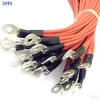
Event
Wire Crimp & Weld Testing Webinar
The only way of really knowing the strength of a crimped terminal is to pull it.
918
[Page extract]
ISBT PTC-00019
This document provides a collection of test methods for the qualification of plastic flat-top closures applied on PET bottles that are used in the beverage industry.
919

Event
Medical Device Testing: Torque testing of Child Resistant Closures (CRC) with 21 CFR Part 11 compliance
Torque testing of Child Resistant Closures (CRC) with 21 CFR Part 11 compliance
920
[Page extract]
ASTM E345-93
Tension tests provide information on the strength and ductility of materials under uniaxial tensile stresses. This information may be useful in comparisons of materials, alloy development, quality control, and design.
921
[Page extract]
ISO 10123
Specifies a method for the determination of the shear strength of anaerobic-curing liquid adhesives used for retaining cylindrical assemblies, pin-and-collar type, or for locking and sealing threaded fasteners.
922
[Page extract]
BS EN 671-2
Fire hydrants, Fire hoses, Firefighting equipment, Flexible pipes, Fire safety in buildings, Design, Performance, Performance testing, Conformity, Approval testing, Corrosion tests, Ageing tests, Flow measurement, Impact testing, Pressure testing, Hydra
924

Event
Medical Devices – Syringe & Needle Testing Fundamentals
Vial sealing is a critical step in the process of ‘fill and finish’ operations for vaccines and medications, as it defines the seal quality of the final product, ensuring sterility and preventing leakage.
925
[Page extract]
ASTM D2919
This test method covers data for assessing the durability of adhesive lap-shear joints while stressed in contact with air, air in equilibrium with certain solutions, water, aqueous solutions, or other environments at various temperatures.