Search results
1176
[Page extract]
Frequently asked questions
How do I select the right fixture for my material?
Fixture selection depends on specimen dimensions, material type, and the relevant standard.
1177
[Page extract]
Types of torque testing methods
Manual torque testing
Manual torque testing uses handheld or bench-mounted torque testers.
1178
[Page extract]
Applications in industrial settings
Insertion and withdrawal testing is not limited to electrical connectors. It is used to validate the performance of:
1179
[Page extract]
What is fastening torque
Fastening torque refers to the rotational force applied to tighten a fastener, typically measured in Newton-metres (N·m) or pound-force inches (lbf·in). The correct torque value ensures adequate clamping without overstressing components.
1180
[Page extract]
Secant modulus compared to other moduli
Different moduli are used to describe the stiffness of materials, each calculated at different points on the stress-strain curve:
1181
[Page extract]
Introduction to peel testing
Peel testing is a fundamental method in materials testing, used to evaluate the strength of adhesive bonds between two materials.
1182
[Page extract]
Torque testing standards
A range of recognised standards define the correct procedures for reverse ratchet torque testing, ensuring consistent and reliable results.
1183
[Page extract]
Understanding tensile strength in testing
Both pull-off and pull-out testing measure tensile strength, which is the maximum load a specimen can sustain under tension before failure.
1184
[Page extract]
The concentric ring method
The most widely used approach to equibiaxial flexure compression testing is the concentric ring method. A circular specimen is supported on an outer ring and loaded through a smaller, concentric inner ring.
1185
[Page extract]
Standards and protocols
Notable standards and specifications
Several international standards define single lap shear testing methods:
1186
[Page extract]
Manual controls and switches
Switches come in many different configurations... toggle, rotary, mercury, push-button, reversing, relay and circuit breaker.
1187
[Page extract]
The science behind chord modulus
Definition and importance
Chord modulus is determined by drawing a straight line, known as the chord, between two points on the stress-strain curve.
1188
[Page extract]
What is strip torque testing?
Definition and importance
Strip torque testing measures the torque required to continue rotating a threaded closure beyond its normal sealing point until the thread strips or the closure fails.
1189

Event
Webinar: Essentials of Adhesion/Peel strength testing
There is a reason people reach for duct tape as a fix for almost everything – adhesion strength.
1190
Event
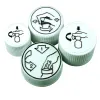
Child Resistant Closure Testing
Medical, Pharmaceutical and Chemical Packaging takes product safety seriously.
1191

Event
Child Resistant Closure Torque Testing
Medical, Pharmaceutical and Chemical Packaging takes product safety seriously.
1192
[Page extract]
BS EN 13411-3
This European Standard deals with the requirements for ferrules for the ferrule-securing of eyes and endless loops - it applies to slings and assemblies using steel wire ropes for general lifting applications up to and including 60mm diameter conforming
1193
[Page extract]
ISO 11070
Specifies requirements for introducer needles, introducer catheters, sheath introducers, guidewires and dilators supplied in sterile condition and intended for single use in conjunction with intravascular catheters specified in ISO 10555-1.
1194
[Page extract]
ASTM F1269-06
These test methods cover tests to determine the shear strength of a series of ball bonds made by either thermosonic or thermal compression techniques using either gold or copper wires.
1195
[Page extract]
ISO 594-1
Specification of the requirements for conical (Luer) fittings for use with hyperdemic syringes and needles and with certain other apparatus for medical use such as transfusion and infusion sets.
1196
[Page extract]
BS 7409
Lays out safety requirements for wheeled conveyances for one or more children. Does not cover wheeled conveyances designed for invalid children and does not specify requirments for accessories or products not designed for use with a chassis.
1197
[Page extract]
ASTM D2062
The method(s) in the standard along with those in Test Methods D 2051, D 2052, D 2053, D 2054, D 2057, D 2058, D 2059, D 2060, and D 2061 are a collection of proven test methods.
1198
[Page extract]
ASTM D3950
This specification covers nonmetallic strapping and joining methods for closing, reinforcing, and bundling materials for shipment, unitizing, palletizing, and bracing for car and truck loading.
1199

Event
Fundamentals of Adhesion (Peel) Testing
There is a reason people reach for Duct Tape as a fix for almost everything – Adhesion Strength. From busted pipes to ripped furniture, the preference for a solution that “does not easily peel off” is the guiding principle for manufactures.
1200

Event
Essentials of Adhesion (Peel) Testing
There is a reason people reach for Duct Tape as a fix for almost everything – Adhesion Strength. From busted pipes to ripped furniture, the preference for a solution that “does not easily peel off” is the guiding principle for manufactures.